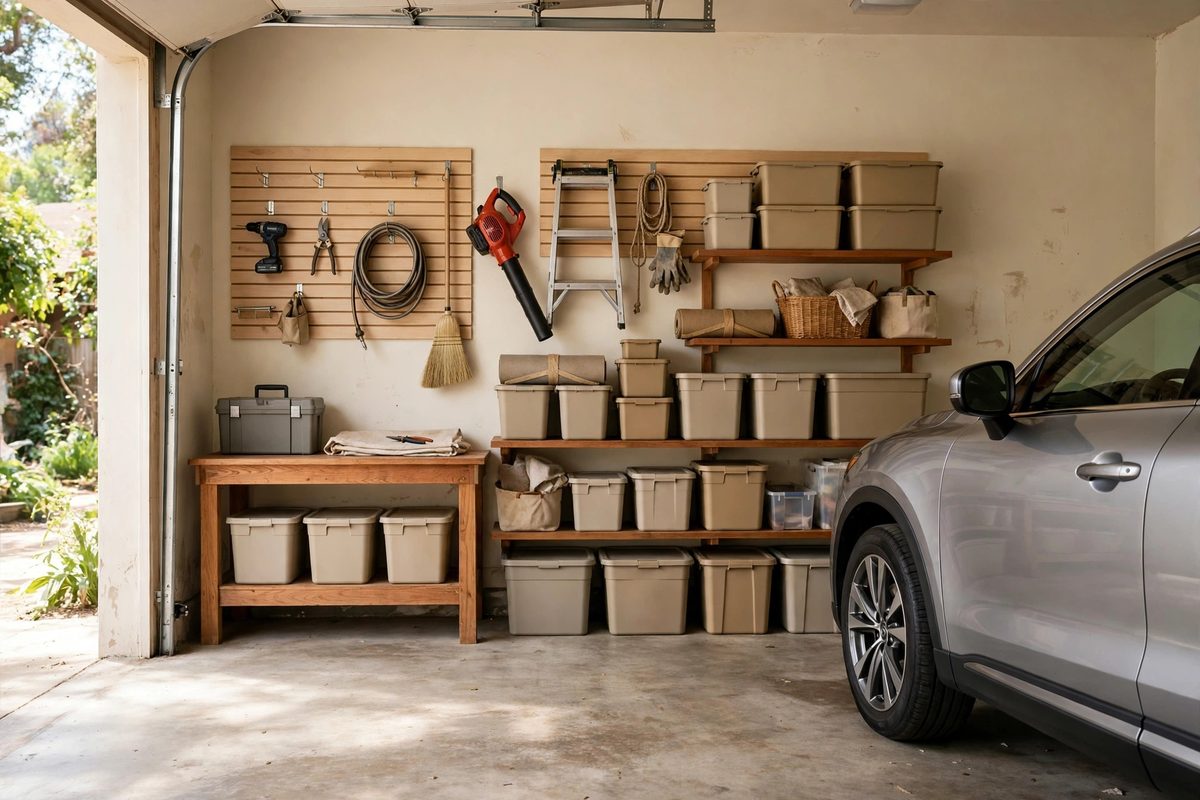
Most garages do not start out messy on purpose. They start out as the one room with no audience, so everything without a clear home ends up there. The holiday bins, the paint cans, the bike nobody rides in winter, the toolbox, the sports bag, the box of things you meant to donate last spring. One by one they fill the floor, and then one day you cannot open a car door all the way, or you cannot find the ladder without moving three other things first.
A garage does not need to look like a showroom to work. It needs a clear floor, a place for the car if you park inside, and a home for each kind of gear you actually own. This guide covers garage organization ideas that fit real garages, from a full two-car space to a single-car garage that also holds a workbench, with storage choices, budget fixes, and a reset routine that keeps the floor clear.
Table of Contents
- Start with a garage edit
- Zone the garage by job
- Walls first: slatwall, tracks, and pegboard
- Overhead storage for seasonal gear
- Cabinets for chemicals, paint, and small parts
- Tools and a workbench that stays usable
- Sports, bikes, and seasonal gear
- Small and single-car garages
- Budget garage organization
- The seasonal reset and mistakes to avoid
- Frequently asked questions
Start with a garage edit
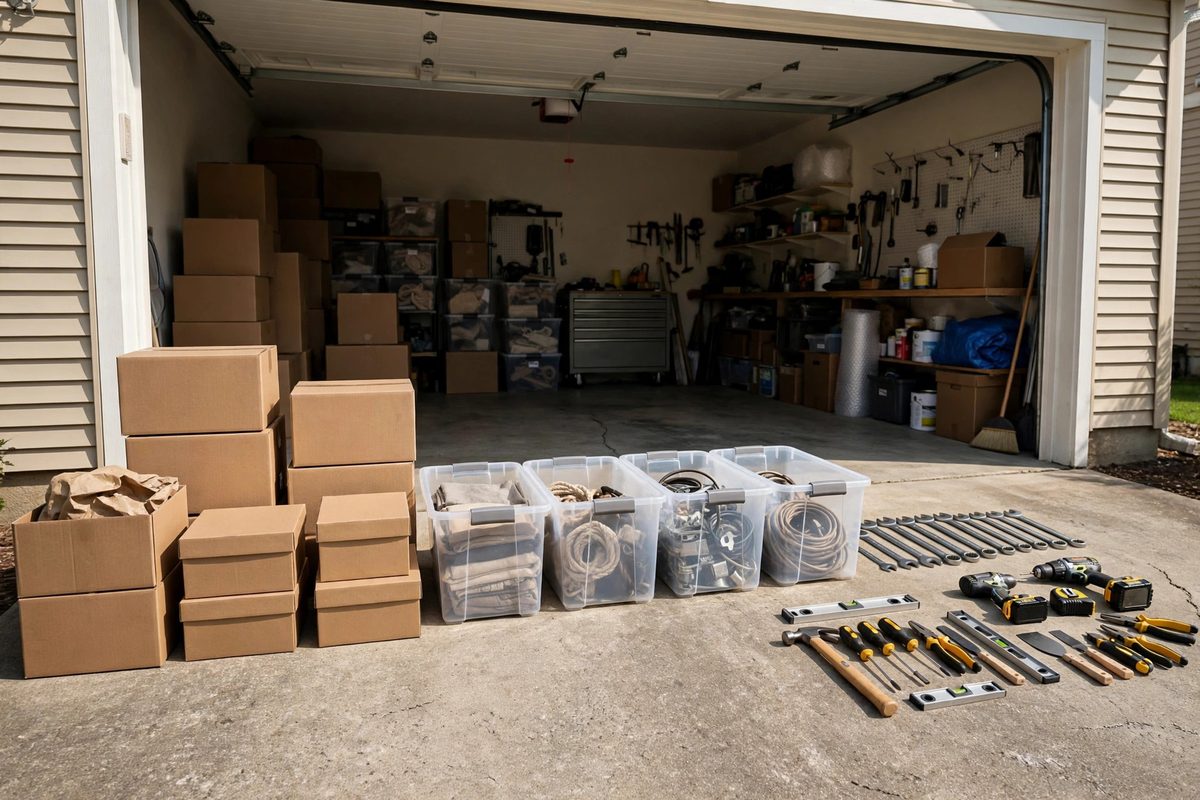
Before you buy shelves or cabinets, pull everything into the open and look at it honestly. Not all at once if the garage is full, but in sections: one wall, one corner, one pile at a time. You will find duplicates, broken items, empty boxes, gear for hobbies you no longer do, and supplies you forgot you owned.
Sort into four groups: keep and use often, keep but store up high or out of the way, donate or pass on, and throw away or recycle. Be strict about the middle group. If a box has not been opened in two years and you cannot name what is in it without opening it, open it, decide, and label it before it goes back. The same sort-first rule runs through our guide to Bedroom Organization Ideas (https://declutterjoy.blog/bedroom-organization-ideas/), and it matters even more in a garage, because a garage can swallow a whole afternoon of sorting and still look full if nothing actually leaves.
Zone the garage by job
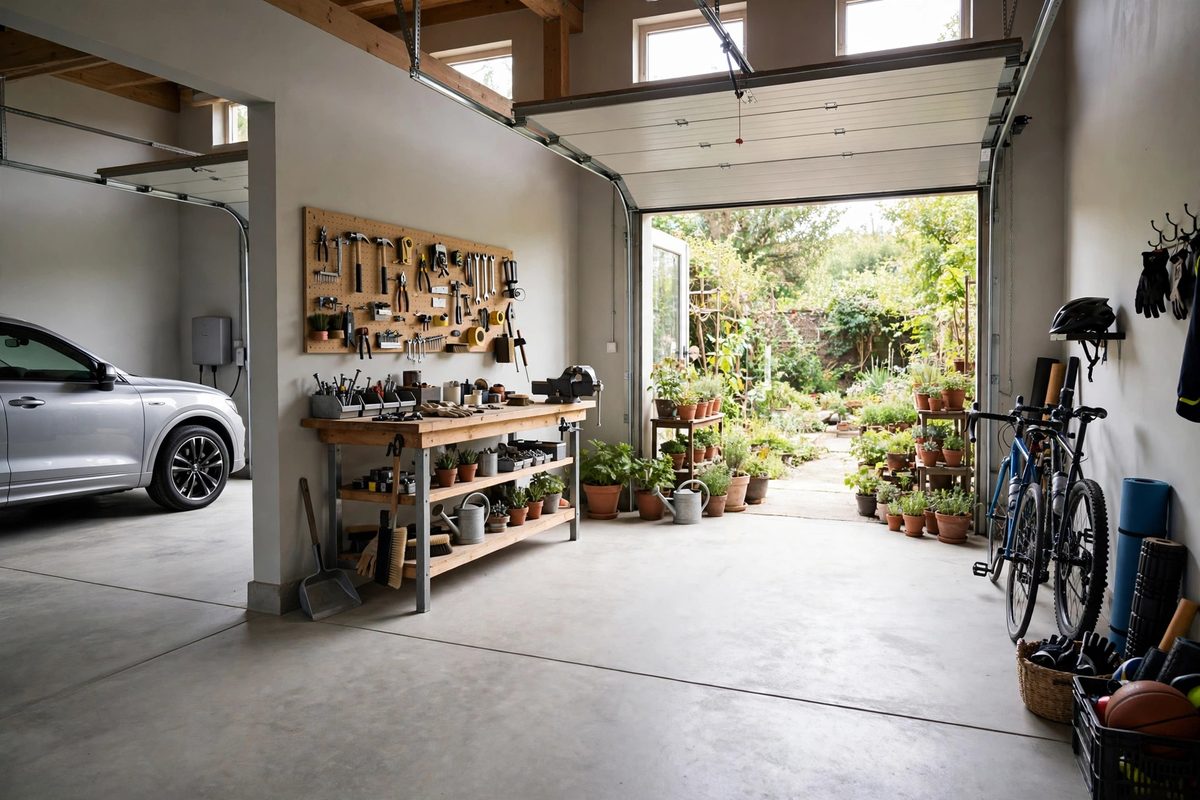
A garage works when each kind of gear has a zone and the zones do not bleed into each other. Think about how you actually use the space. Cars need a clear path in and out. Tools need to be near the workbench. Garden gear needs to be near the door to the yard. Sports gear needs to be easy to grab on the way out.
Try five zones, adjusted to your garage. A parking zone, kept clear even when other zones are mid-project. A tool and work zone, around the bench. A garden and yard zone, near the outside door. A sports and recreation zone, near the car or the door you leave through. And a seasonal and long-term zone, up high or in cabinets, for things you touch a few times a year. When each zone has a job, you stop stacking new things in the first open spot. The same zone thinking helped the tight hallway in our Entryway Organization Ideas (https://declutterjoy.blog/entryway-organization-ideas/) guide, and it works just as well across a garage floor.
Walls first: slatwall, tracks, and pegboard
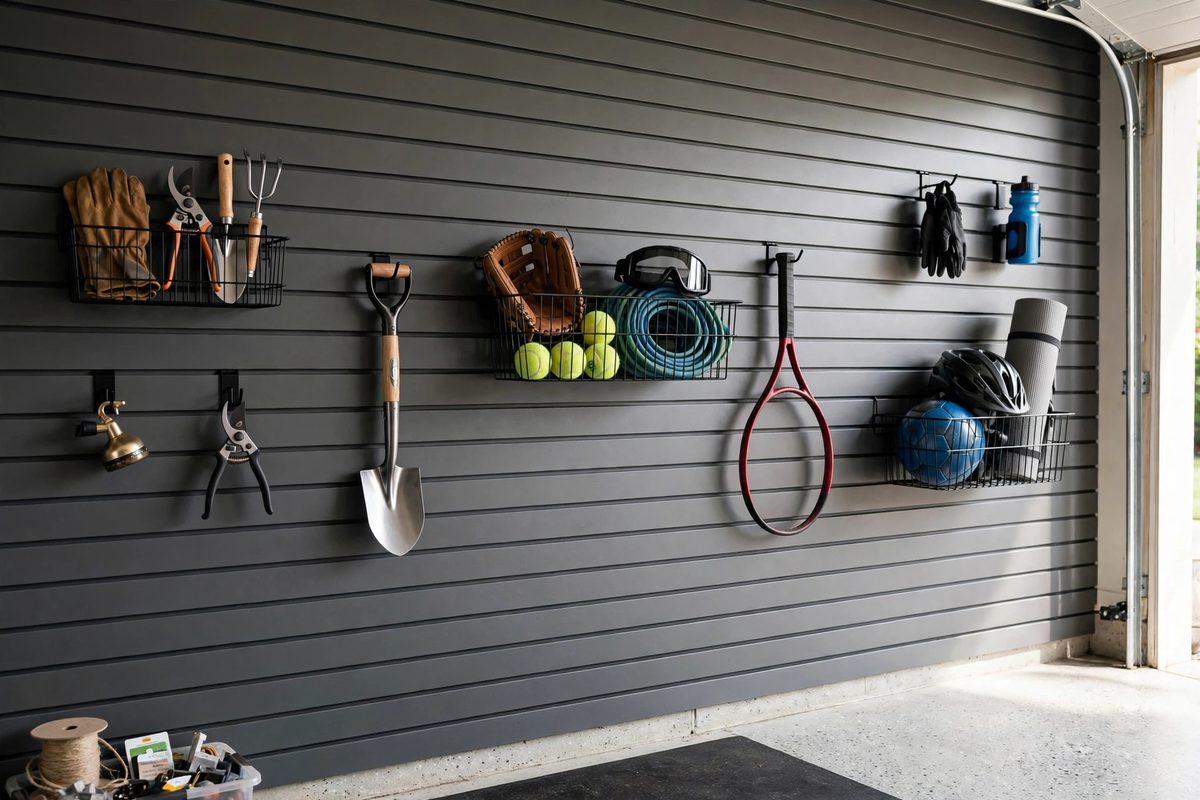
The fastest way to clear a garage floor is to move storage to the walls. Floor shelves eat walking space and car-door space. Wall storage gives that space back, and it keeps gear visible, which means you actually use it and put it back.
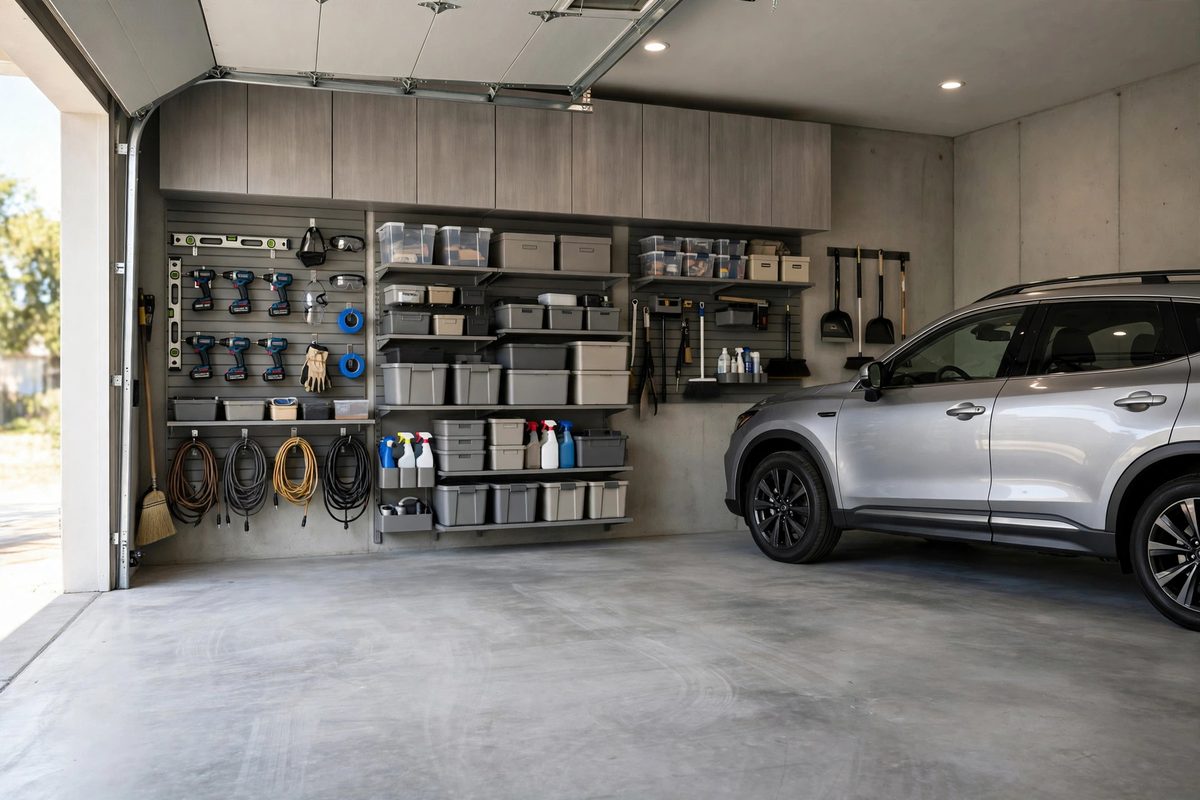
Slatwall panels give a clean, flexible wall. Hooks, baskets, and small shelves slide into the grooves, so you can move a bike hook or a basket when your gear changes. A horizontal track system does a similar job with less coverage: one rail on the studs, then hooks for ladders, garden tools, cords, and bulky items. Pegboard is the cheapest option and works well above a workbench for hand tools, as long as it is mounted firmly and the hooks fit snugly. Whichever system you choose, mount into studs, not just drywall, for anything heavy. A wall that holds is the difference between organized and a pile on the floor again.
Overhead storage for seasonal gear
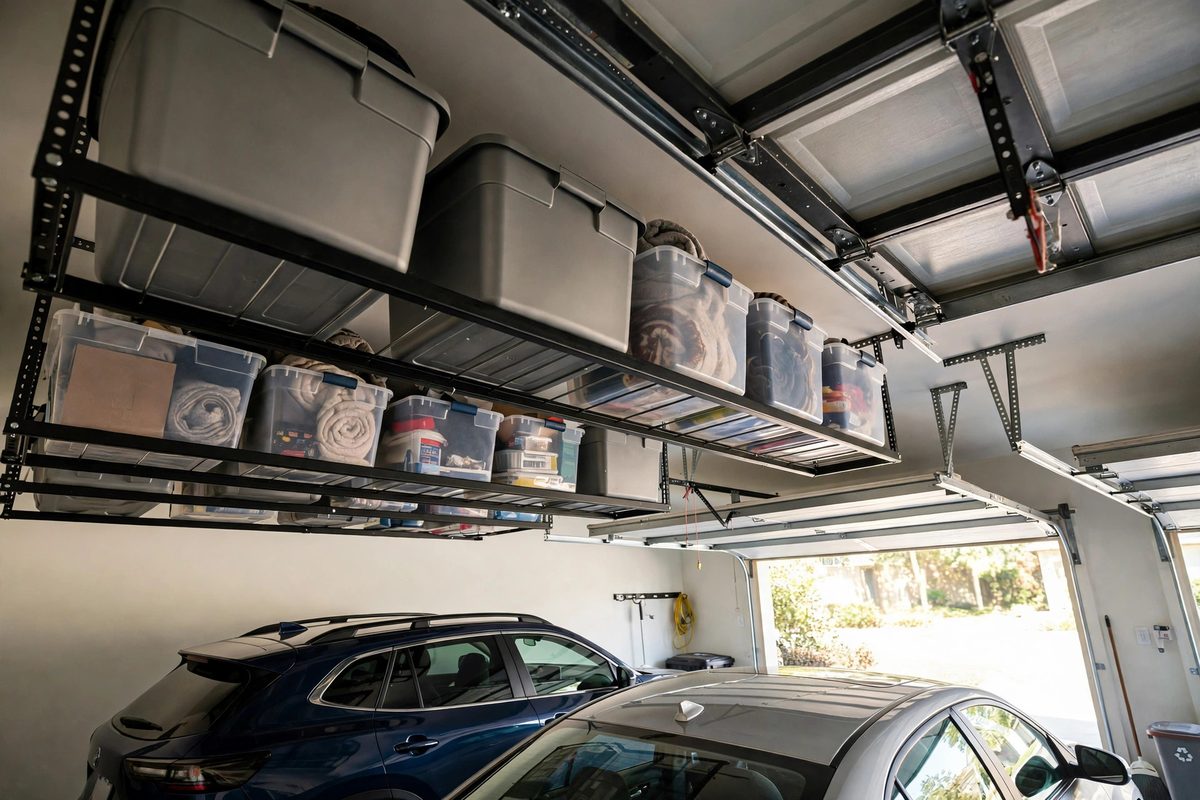
The ceiling is the most underused space in most garages, and it is perfect for the things you only need a few times a year. Holiday decorations, camping gear, out-of-season sports equipment, and spare bins all belong up high, not on the floor in front of the car.
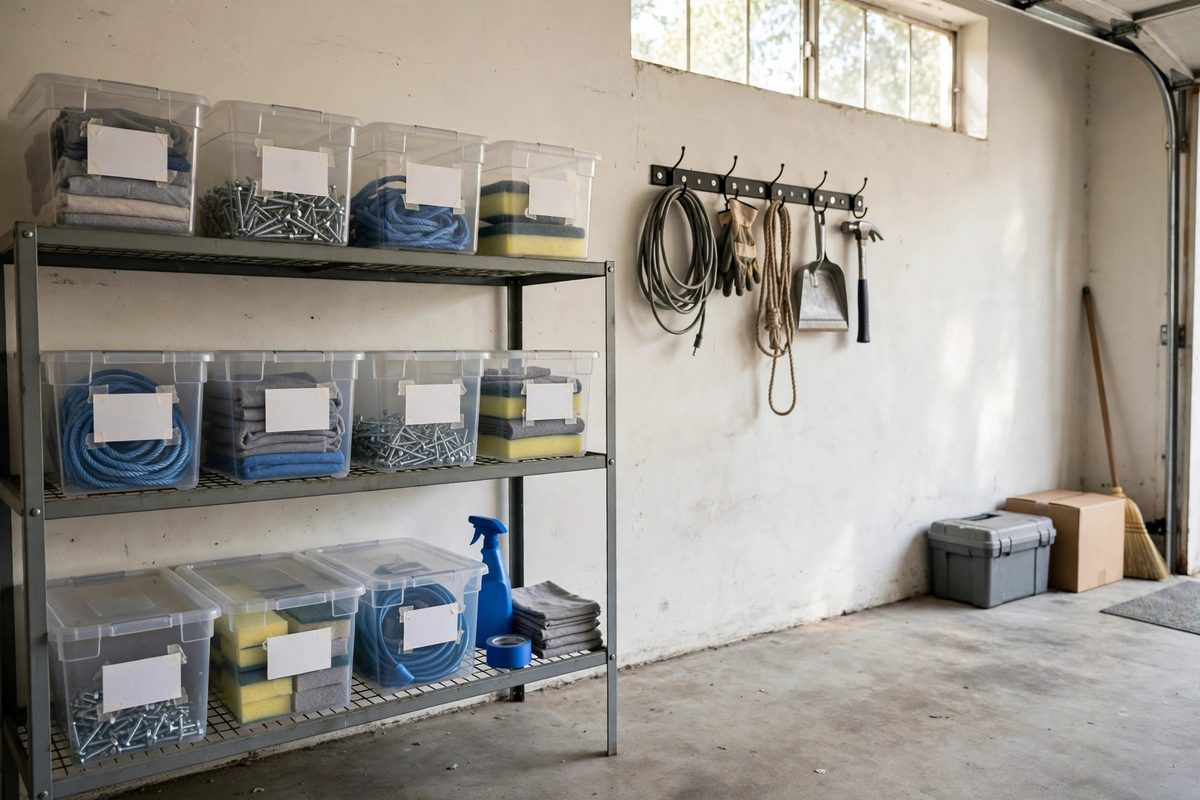
Fixed overhead racks bolted into ceiling joists hold labeled bins and keep them out of the daily path. Leave enough clearance for the garage door when it opens, and keep a step stool in a fixed spot so getting a bin down is a planned job, not a climb over boxes. Label bins on the side you can see from below, and keep a simple list on the wall or in your phone of what lives in each bin. Overhead storage only works if you can find things without pulling down every bin, and the label is what makes that possible.
Cabinets for chemicals, paint, and small parts
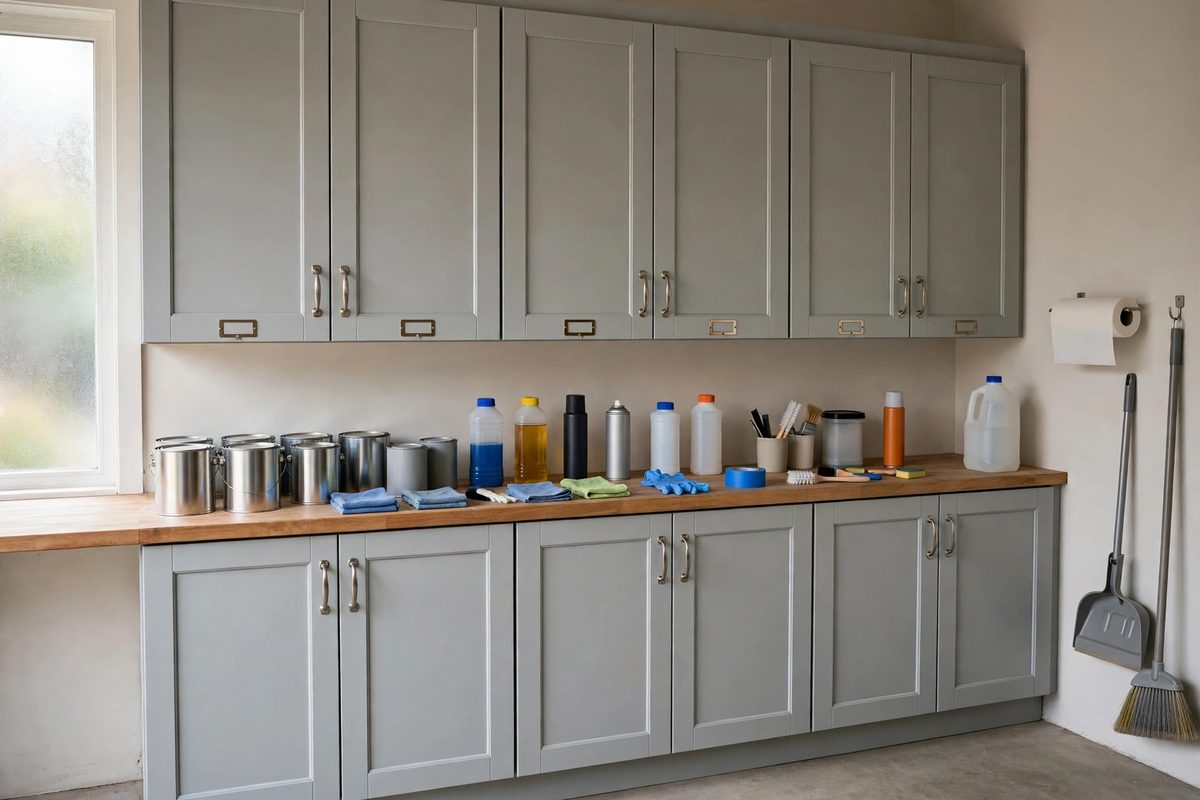
Some garage items should not live on open shelves. Paint, automotive fluids, pesticides, and sharp or small parts are safer behind a door, out of reach of children and pets, and out of sight so the garage looks calmer.
Use closed cabinets for chemicals and paint, and keep them upright, labeled, and away from heat sources. Keep small parts in one cabinet or one set of labeled drawers, sorted by job: fasteners, electrical, plumbing, and bike repair, for example. If you cannot find a screw without opening five drawers, the system is too fine. One drawer per job, with a label, is enough for most homes. Keep everyday items, like a flashlight, work gloves, and a rag, in one easy spot near the door or the bench, so you are not opening a cabinet for every small task.
Tools and a workbench that stays usable
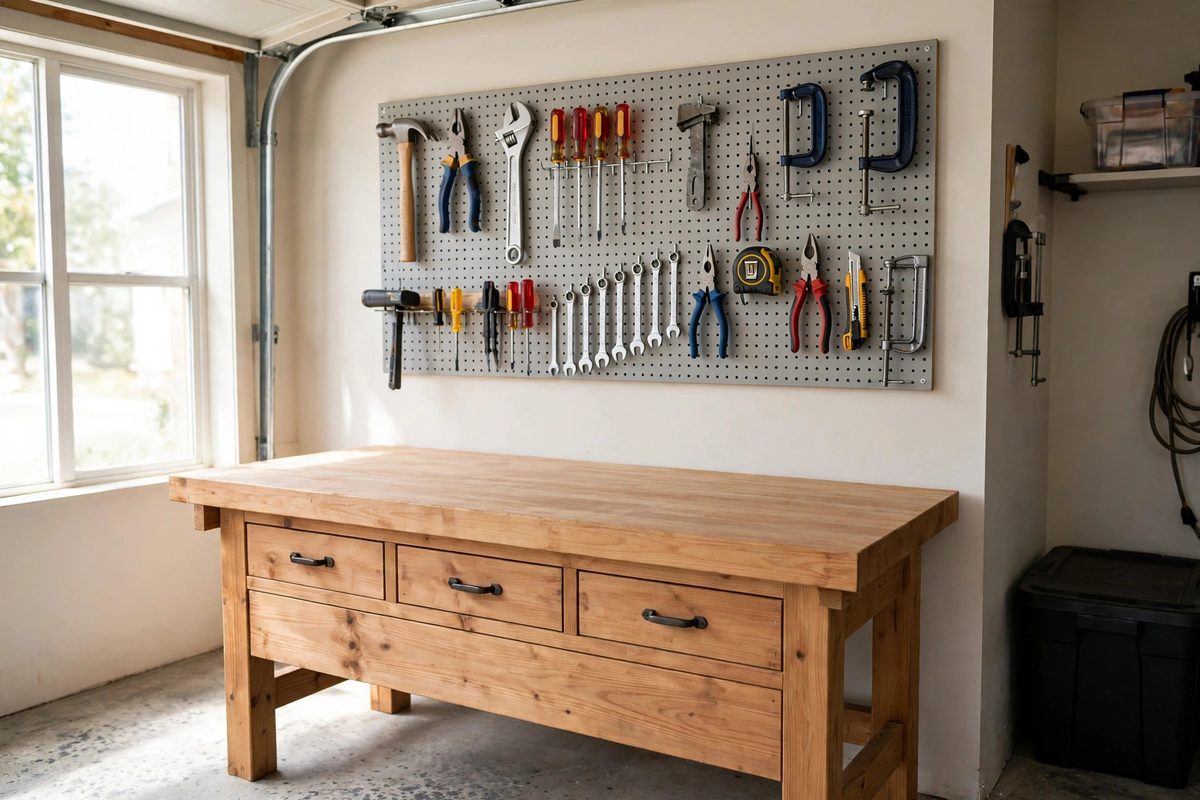
A workbench buried under tools is not a workbench, it is a shelf. The fix is to give tools a wall home and keep the bench surface for work only.
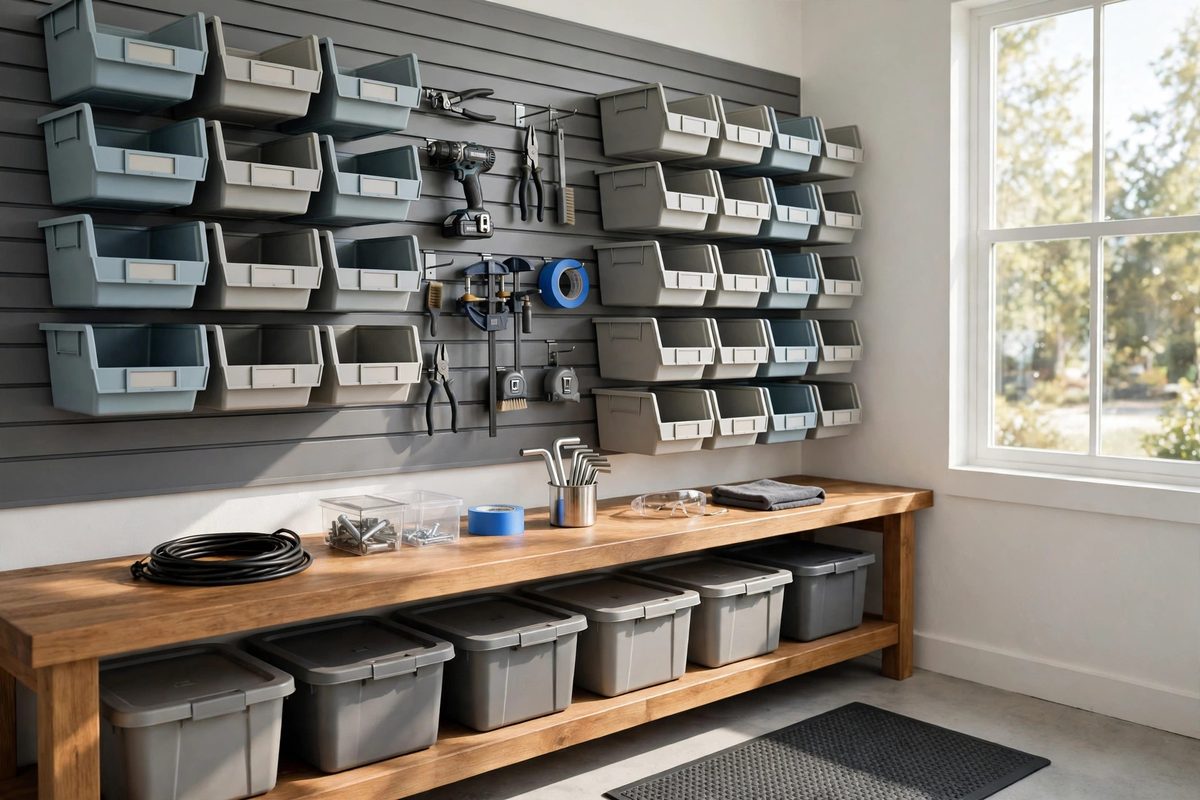
Hang the tools you use most on pegboard or a track above the bench, in the order you reach for them. Keep a small tray or magnetic strip for screws and bits during a project, and put them back when the project ends. Store power tools in a cabinet or on a shelf near the bench, with chargers in one spot and cords wrapped, not tangled across the floor. The same workbench discipline we used for a craft space in our Craft Room Organization Ideas (https://declutterjoy.blog/craft-room-organization-ideas/) guide applies here: one clear surface, one wall for tools, and one rule that the bench is cleared at the end of each project.
Sports, bikes, and seasonal gear
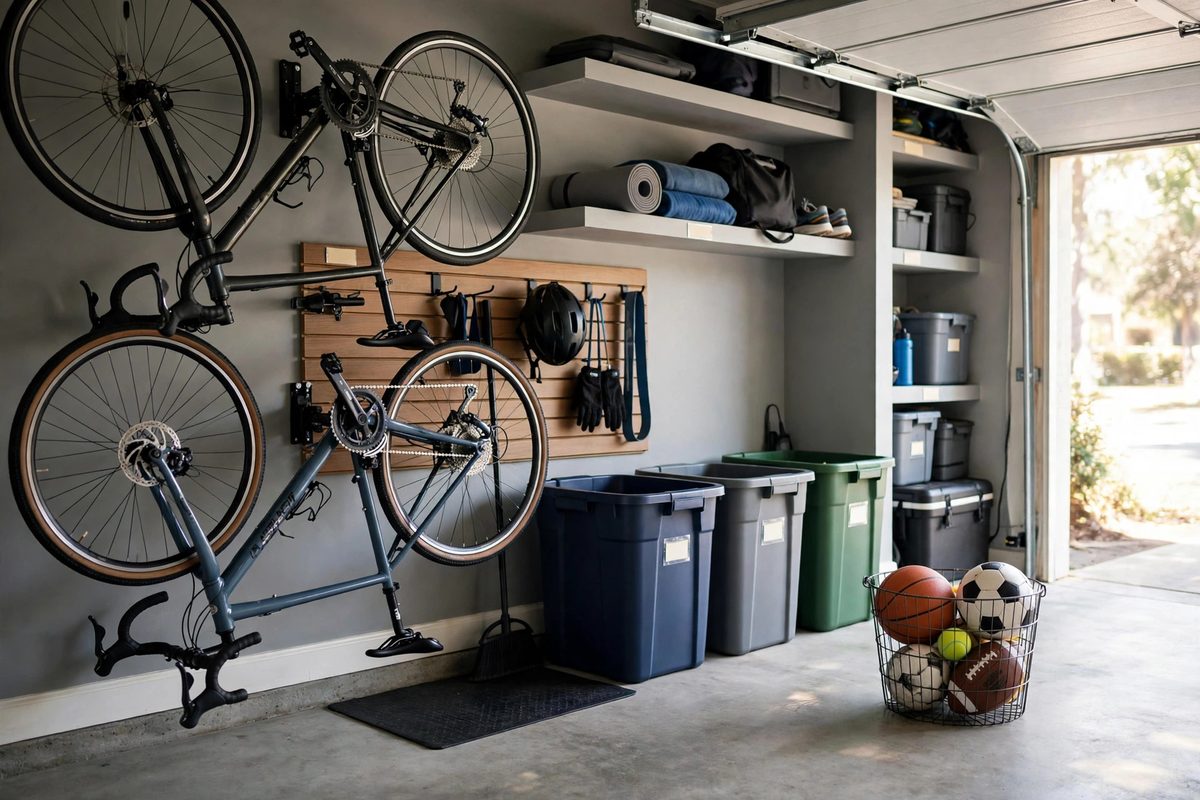
Sports gear is bulky, oddly shaped, and used in bursts, which is why it ends up leaning against a wall or piled in a corner. It needs hooks and bins sized for the gear, not generic shelves.
Hang bikes on wall hooks or a ceiling hoist if floor space is tight, with helmets and pumps on a hook nearby. Use one bin or basket per sport or per person, labeled, so a soccer bag does not mix with ski gear. Keep balls in a net or a tall bin, not loose on the floor. For seasonal gear, rotate at the change of season: winter gear goes up high or to the back when spring arrives, and summer gear takes its place near the door. That one seasonal swap, done twice a year, prevents the slow pile-up that fills most garages.
Small and single-car garages
A small garage can still work, but it has to be honest about its size. If one car, a workbench, and a bike all share the space, there is no room for a full shelving wall, a drying rack, and a pile of seasonal bins, and pretending otherwise only creates a new obstacle.
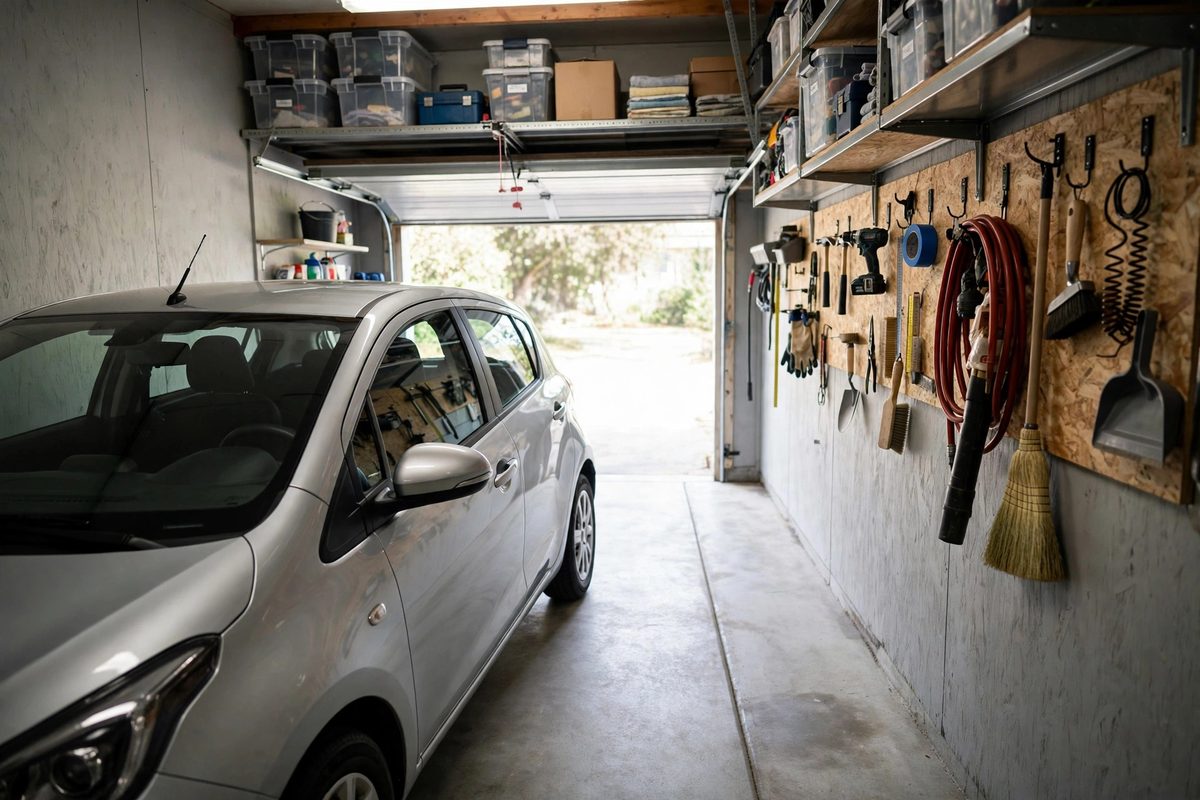
Go vertical before you go wider. Wall hooks and one overhead rack hold more than a floor shelf unit in the same footprint. Keep the car path clear first, then add storage around it, not in it. Use rolling storage only if it can move out of the car path and back without a fight. Keep one rule that saves small garages: if new gear comes in, old gear leaves, goes up high, or gets donated. The same small-space logic we used for a vanity in our Makeup Vanity Organization Ideas (https://declutterjoy.blog/makeup-vanity-organization-ideas/) guide applies here. Keep the footprint small, go vertical, and give everything one home.
Budget garage organization
You do not need matching cabinets or a renovated garage to fix the space. Some of the most usable garages I have seen cost less than a set of new tires. A secondhand shelf unit, a few sturdy hooks, and clear bins with labels will do more than an expensive cabinet that nobody maintains.
Spend money only where it changes daily life. Sturdy wall rails mounted into studs are worth paying for, because a rail that pulls out of drywall helps nobody. So is a safe overhead rack, properly bolted into joists. Everything else can be simple, as long as it is easy to reach and easy to put back.
Which garage storage fits your garage?
| Piece | Best for | Typical cost | Watch out for |
|---|---|---|---|
| Slatwall or track system | Tools, garden gear, bikes on the wall | $50-$300 per wall | Mount into studs, check weight limits |
| Overhead ceiling rack | Seasonal bins and holiday gear | $80-$250 | Leave garage-door clearance, bolt into joists |
| Closed steel or wood cabinets | Paint, chemicals, small parts | $100-$400 per cabinet | Keep chemicals upright and labeled |
| Heavy-duty shelf unit | Bins, paint, and bulky supplies | $60-$200 | Anchor tall units to the wall |
| Bike hooks or hoist | Bikes off the floor | $15-$60 per bike | Measure ceiling height and bike weight |
Quick pick guide:
- You have a two-car garage: wall tracks on one wall, overhead racks for seasonal bins, and closed cabinets for chemicals. That trio covers daily gear, seasonal gear, and safety.
- You have a single-car garage: wall hooks, one overhead rack, and one cabinet. Nothing on the floor that blocks the car door.
- You park outside and use the garage as a workshop: pegboard above the bench, cabinets for tools and parts, and a clear work zone in the middle.
- You rent and cannot drill much: freestanding shelf units, rolling carts, and over-door hooks. Everything leaves with you when you move.
The seasonal reset and mistakes to avoid
A garage does not stay tidy on its own. It stays tidy because someone resets it, briefly and often. The reset takes thirty minutes, twice a year, plus a five minute tidy after a project. Sweep the floor. Put tools back on the wall. Check bins and labels. Move seasonal gear to its zone. Note anything broken, leaking, or expired, especially paint and chemicals, and dispose of those safely.
Mistakes to avoid:
- Buying storage before the edit. You will buy the wrong size and fill it with gear you do not use.
- Shelves for everything, with no wall hooks. Bulky gear needs hooks, not deep shelves it falls off.
- Overhead racks that block the garage door. Measure clearance before you buy.
- One big pile for seasonal gear. Unlabeled bins mean every holiday starts with a hunt.
- Chemicals on open shelves within reach of children or pets. Those belong behind a closed door.
- Skipping the seasonal swap. Gear that stays out all year slowly takes the whole garage.
Frequently asked questions
Q: How do I organize a garage on a budget?
A: Start with the edit, then add wall hooks or a track on one wall, one set of labeled clear bins, and one overhead rack if you have ceiling clearance. Spend on safe mounting first, and keep the rest simple.
Q: What is the best way to store bikes in a garage?
A: Hang them on wall hooks or a ceiling hoist to get them off the floor. Keep helmets, pumps, and repair tools on a hook nearby, so the bike zone stays together.
Q: How do I keep my garage floor clear?
A: Give every bulky item a wall or ceiling home, keep the car path clear as a rule, and do a five minute tidy after each project. If something has no wall or ceiling spot, it is a candidate to leave the garage.
Q: Are overhead garage racks safe?
A: Yes, when they are bolted into ceiling joists, kept within their weight limit, and installed with garage-door clearance. If you are unsure about joists or weight, have them installed professionally rather than guessing.
Q: How often should I declutter the garage?
A: Do a five minute tidy after projects and a thirty minute seasonal reset twice a year. A full edit once a year is enough to catch broken gear, expired chemicals, and bins that no longer match their labels.
A good garage does not ask much of you. It asks for a clear floor, a home for each kind of gear, and a few minutes at each season change to put things back. Start with the edit, zone the space by job, and let the storage follow the gear you actually own. The pile will still try to come back, because garages attract stray boxes, but it will have nowhere to settle if the walls and ceiling already have a job.
If you want to learn more about how we think about calm, practical systems for real homes, read About Declutter Joy (https://declutterjoy.blog/about/).