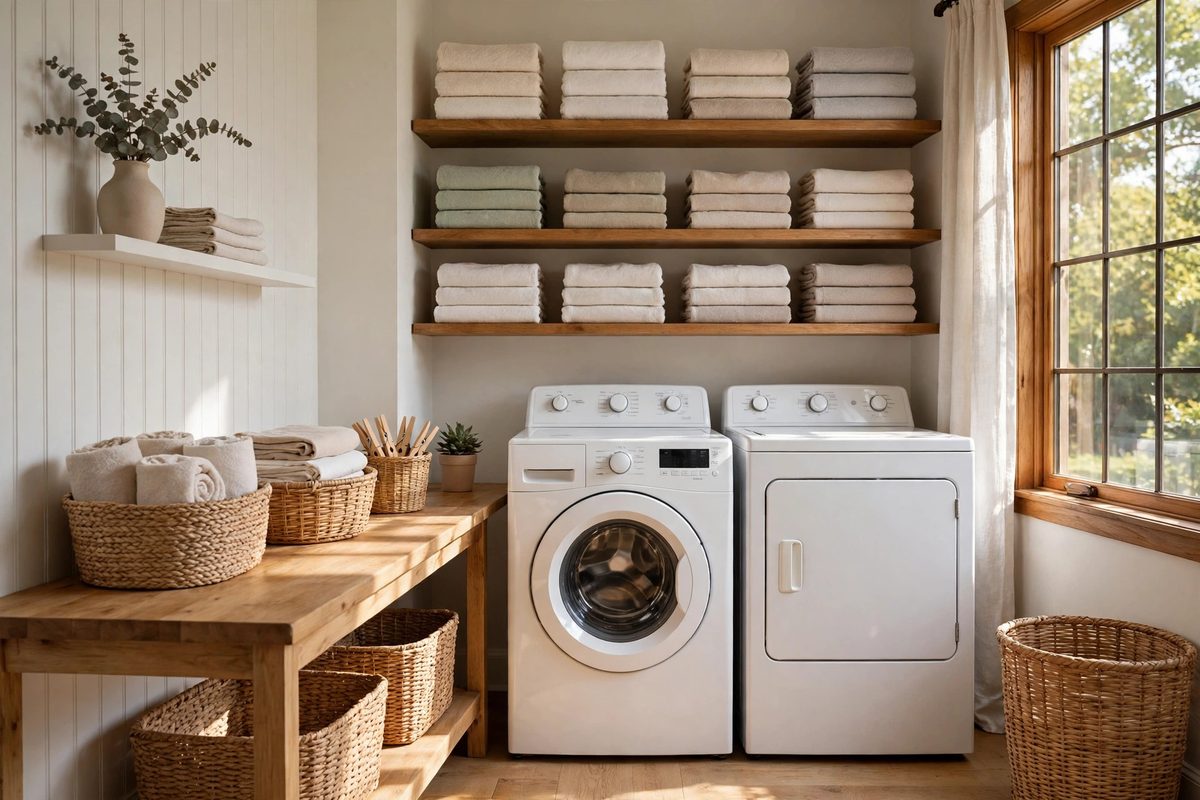
Laundry is the chore that never really ends. One load finishes and another basket appears, and the room where it all happens is often the smallest, most awkward space in the house. Supplies pile up on top of the machines. Clean clothes wait on a chair because there is nowhere to fold them. A stray sock hides behind the dryer for a month. It is no wonder so many people dread laundry day.
The room does not need to be large or newly renovated to work well. It needs a clear path for clothes from dirty to clean to put away, and a home for every supply you actually use. This guide covers laundry room organization ideas that fit real homes, from a full laundry room to a closet with stacked machines, with storage choices, budget fixes, and a reset routine that keeps the pile from taking over again.
Table of Contents
- Start with a laundry edit
- Zone the room by task
- Supplies: detergents and cleaning products
- A sorting station that saves time
- Small laundry rooms and closets
- Drying without clutter
- A folding counter and a put-away habit
- Budget laundry organization
- The weekly reset and mistakes to avoid
- Frequently asked questions
Start with a laundry edit
Before you buy bins or shelves, empty the room and look at what is really in it. Pull everything off the top of the machines, out of the cabinets, and off any shelf that has become a dumping ground. You will probably find half empty detergent bottles, stain removers you bought for one spill, single socks, old rags, and cleaning products that belong in another room entirely.
Sort into three groups: supplies you use every week, supplies you use rarely but still need, and things that can leave the room or leave the house. Keep one detergent, one stain treatment, and one fabric softener or dryer alternative if you use them. Keep the rest only if you can name the next time you will use it. The same sort-first rule runs through our guide to Bedroom Organization Ideas, and it matters even more in a laundry room, because a small room fills up fast and every extra bottle takes space from the work itself.
Zone the room by task
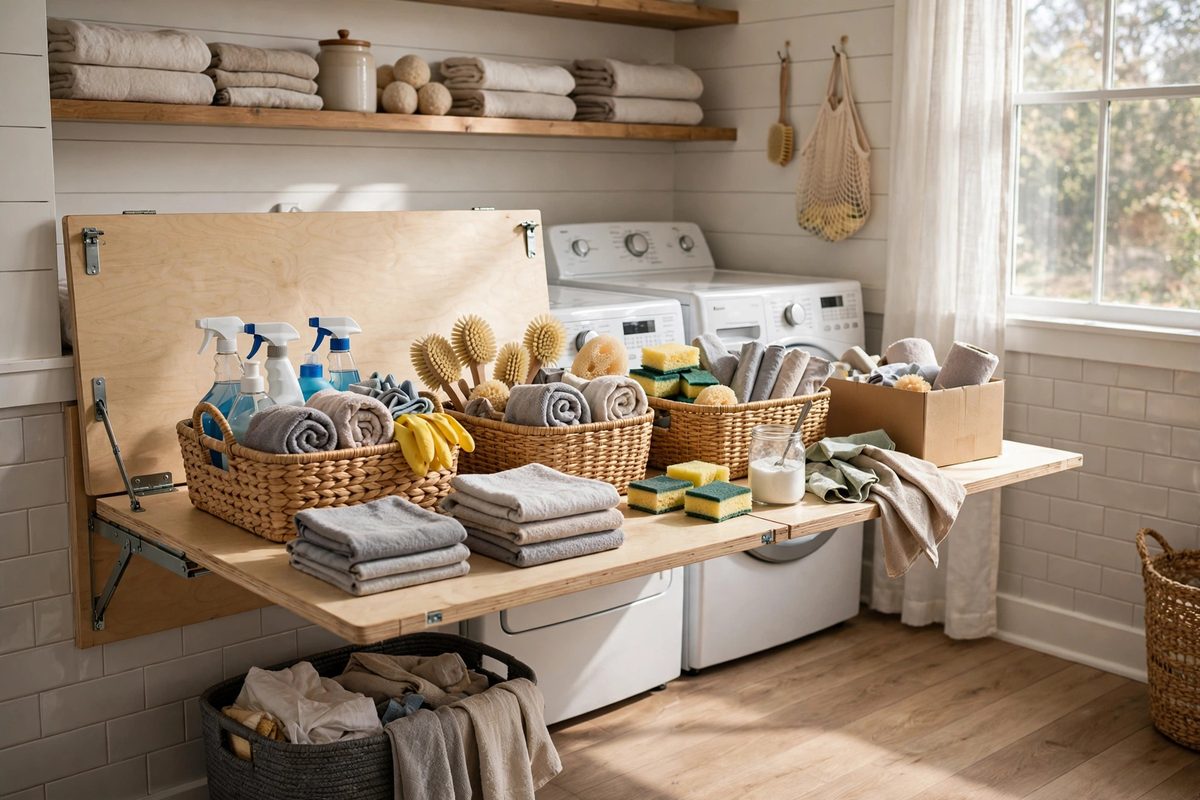
A laundry room works when clothes move in one direction and never have to backtrack. Think about the path a shirt takes. It arrives dirty, gets washed, gets dried, gets folded, and goes back to a closet or drawer. Each step deserves a small zone, even in a closet sized room.
Try four zones. A dirty zone, one hamper or a set of sorting baskets by the door or in the hallway nearby. A wash zone, the machines with detergent and stain treatment within arm’s reach. A dry zone, a rack or rod for air drying, plus a spot for the lint bin and dryer sheets if you use them. And a fold and put-away zone, a clear counter or a basket that holds clean clothes until they are folded. When each zone has a job, you stop moving piles from one surface to another just to get to the machine. The same zone thinking helped the tight hallway in our Entryway Organization Ideas guide, and it works just as well around a washer and dryer.
Supplies: detergents and cleaning products
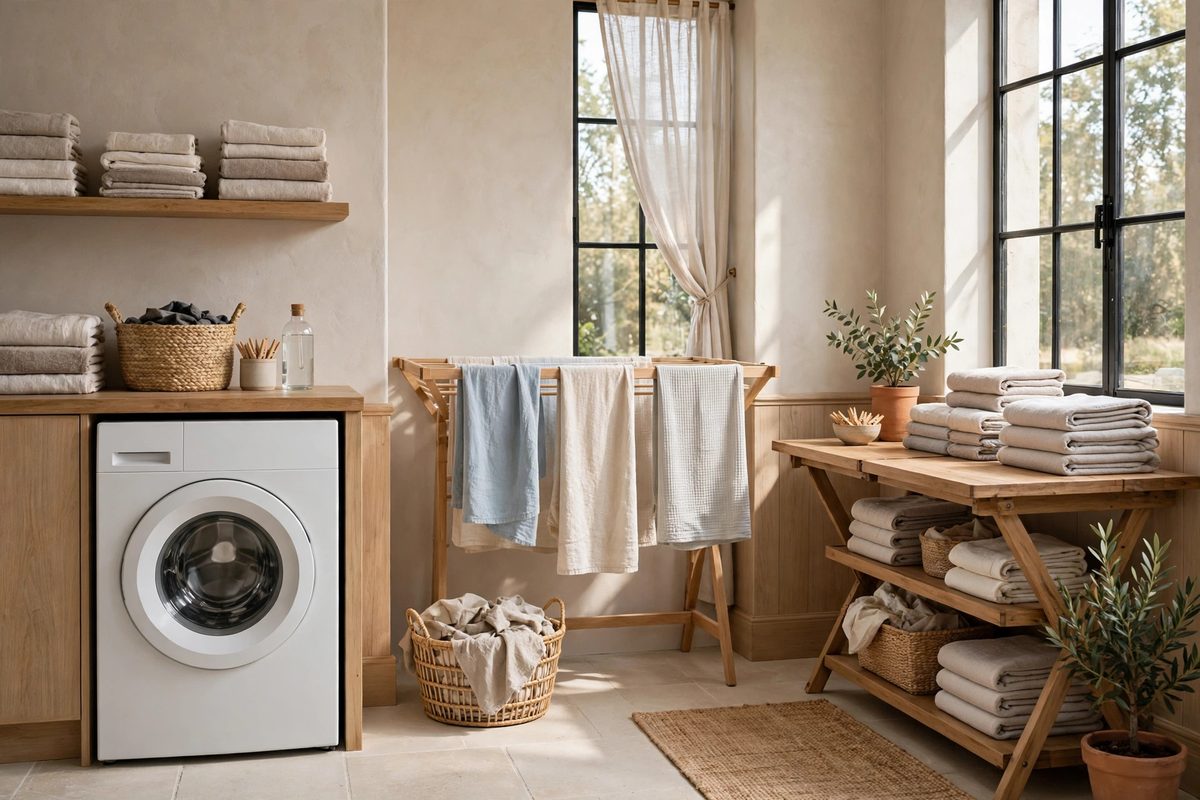
Laundry supplies cause more clutter than laundry itself, because bottles come in different shapes and never quite fit the shelf they land on. The fix is simple: decant what you use often, label what you keep, and keep the rest behind a door.
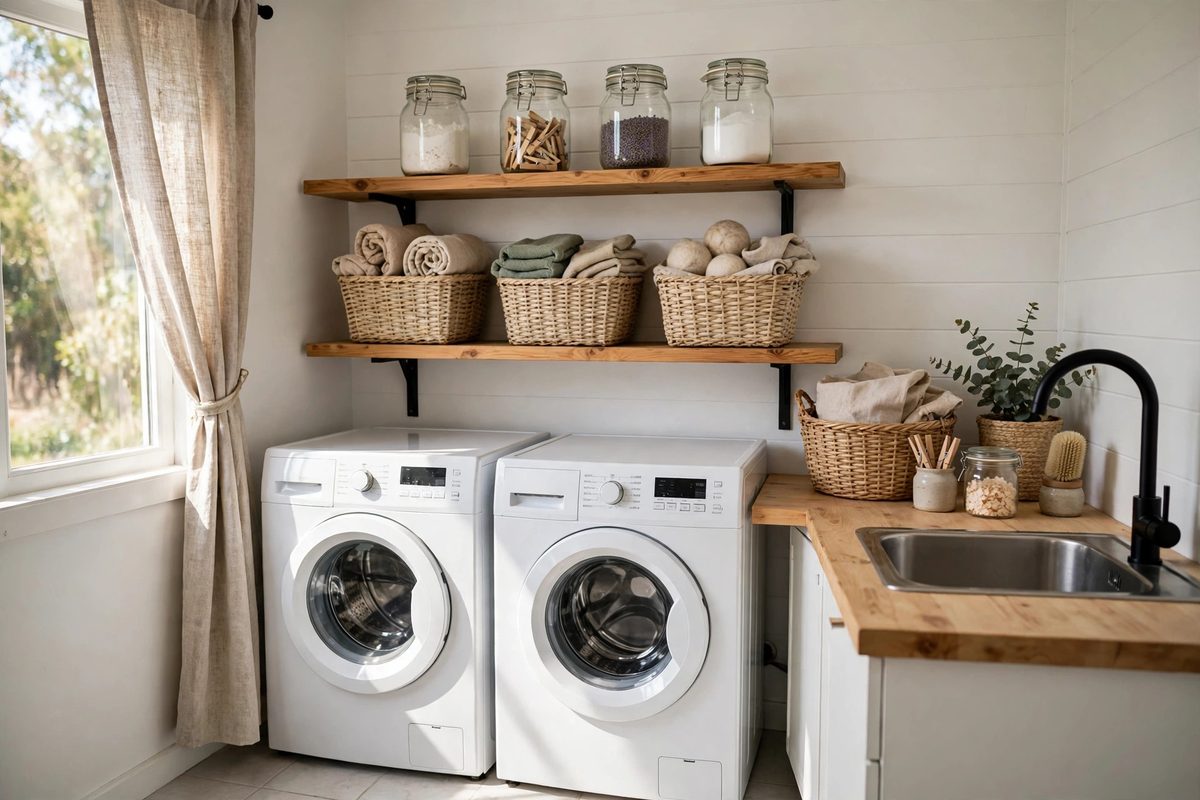
Put everyday detergent in one clear jar or a pump bottle on a shelf above or beside the machines, at a height you can reach without a step stool. Keep stain treatment, bleach alternative, and any specialty wash in one small basket or bin, labeled, so you grab the basket instead of hunting through a cabinet. Store refills and bulky extras on a higher shelf or in a closed cabinet, out of the daily path. One open shelf for daily supplies and one closed spot for backstock is plenty for most homes. Anything that has leaked, dried out, or lost its label should go, because a mystery bottle in a laundry room is clutter with a cap on it.
A sorting station that saves time
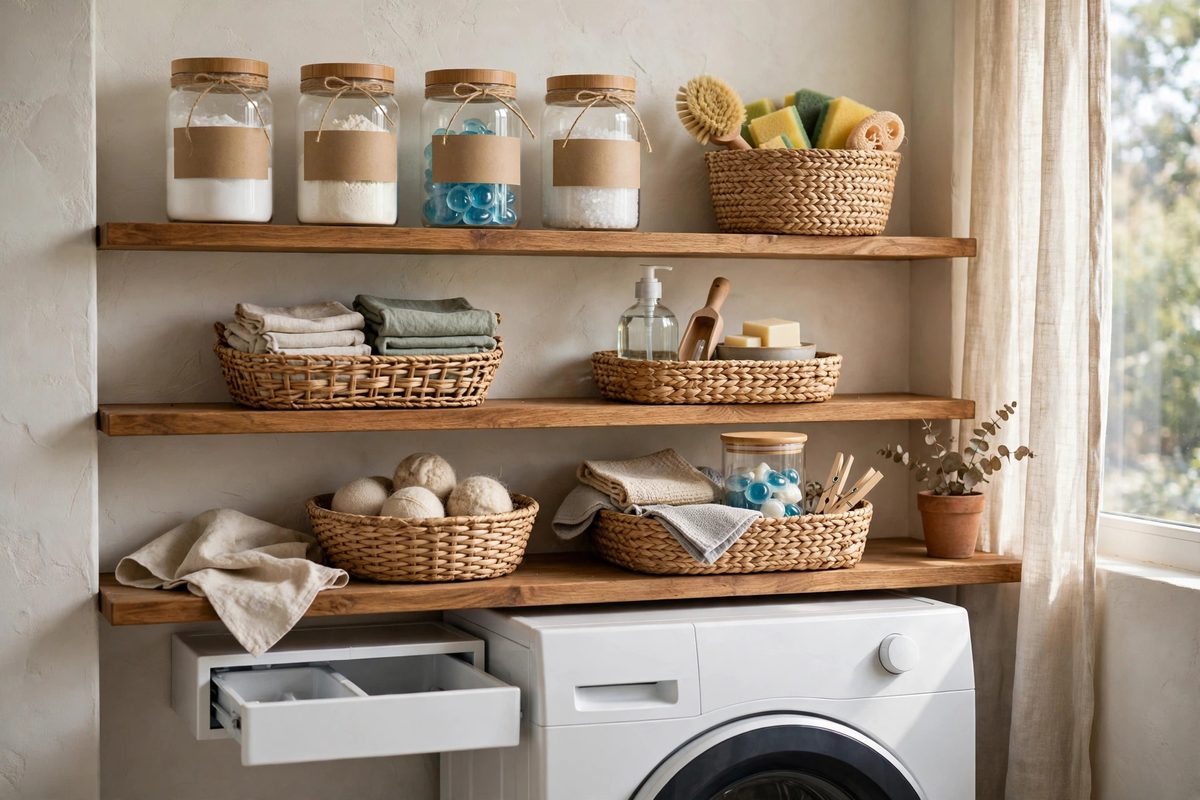
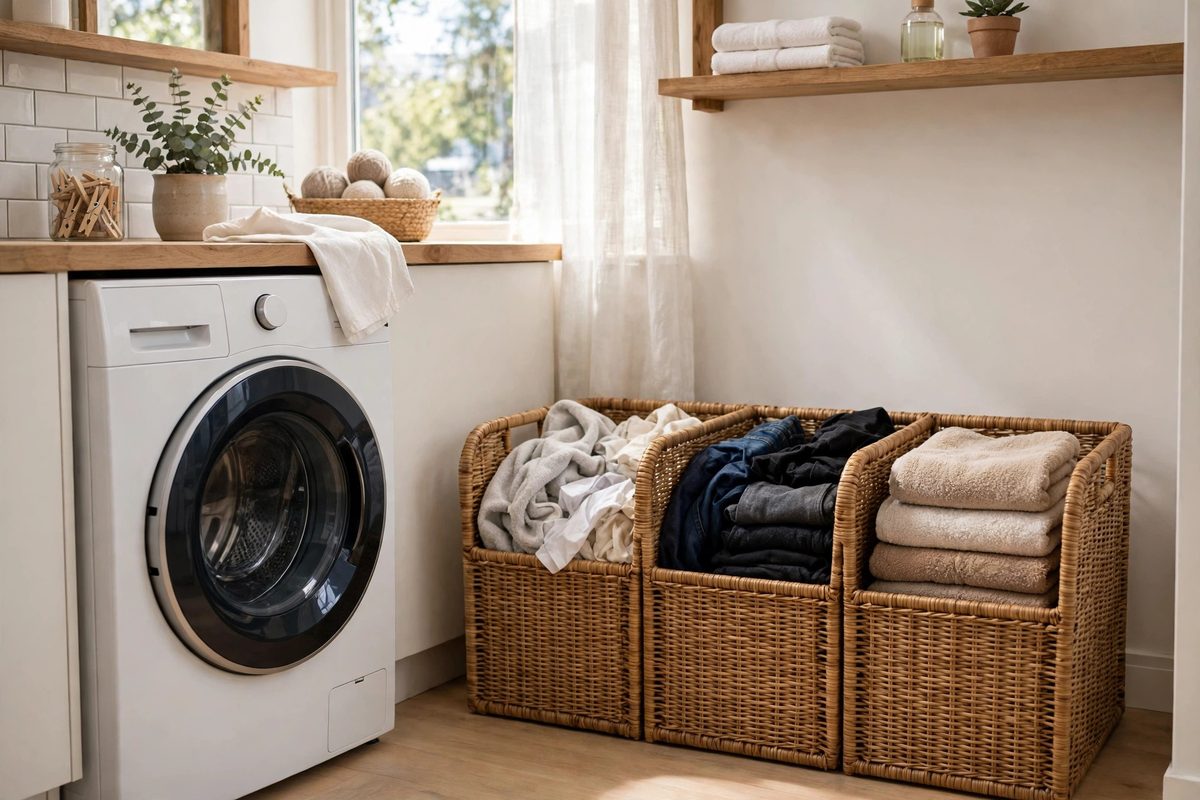
Sorting is where laundry either runs smoothly or piles up. A single hamper that holds everything means every load starts with a sort on the floor, and that sort is exactly the step most people skip. A sorting station does the sorting as clothes arrive, so wash day starts with a basket that is already ready.
Which laundry storage fits your room?
| Piece | Best for | Typical cost | Watch out for |
|---|---|---|---|
| Divided hamper or sorter | Families who sort as they go | $40-$120 | Three sections need three times the floor space |
| Wall shelves above machines | Detergent, jars, and folded linens | $30-$150 | Keep daily items low, backstock high |
| Slim rolling cart | The gap between machines or a wall | $25-$60 | Measure the gap first, including plugs and hoses |
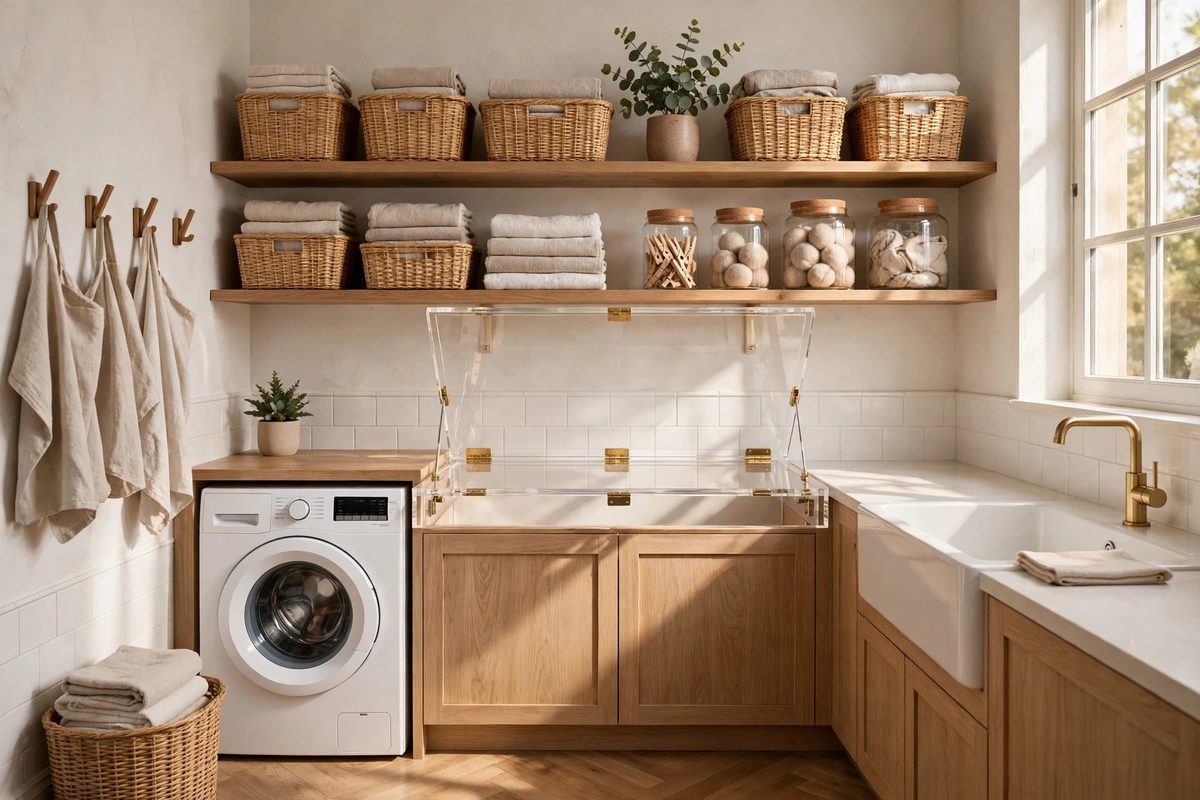
| Folding counter over front loaders | Folding without a separate table | $80-$250 | Leave clearance to open machine doors |
| Wall-mounted drying rack | Air-dry clothes without a floor rack | $30-$90 | Mount into studs, wet clothes are heavy |
Quick pick guide:
- You have a full laundry room: a divided sorter, shelves above the machines, and a folding counter. That trio covers sorting, supplies, and folding without extra furniture.
- You have a laundry closet: a slim rolling cart, one shelf, and a wall-mounted drying rack. Nothing on the floor that blocks the machine doors.
- You share laundry with a family: one section per load type, lights, darks, and towels, plus one basket per person for clean clothes waiting to be put away.
- You rent and cannot drill: a freestanding shelf unit, a rolling cart, and an over-door rack. Everything leaves with you when you move.
If you have room for only one sorter, use two sections: everyday clothes and towels plus bedding. That split alone prevents the most common laundry backup, which is a load of towels waiting because the everyday load went in first.
Small laundry rooms and closets
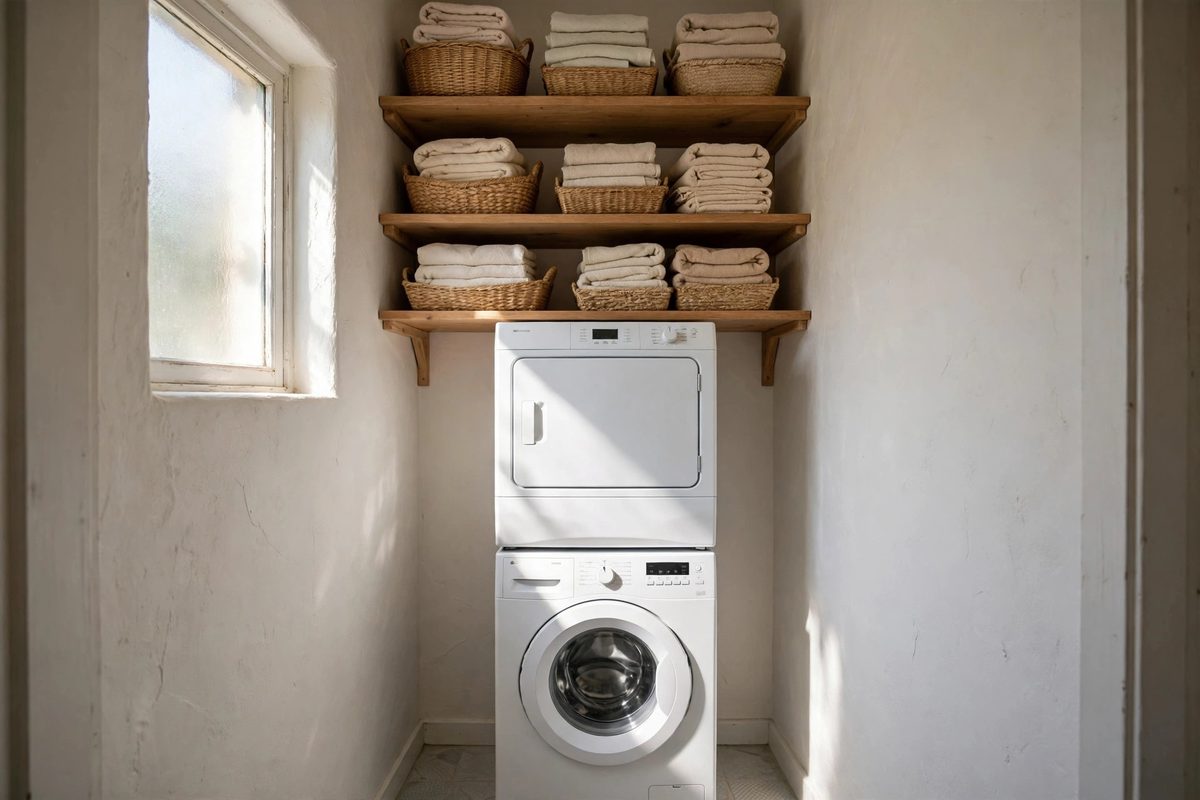
A small laundry room can still work, but it has to be honest about its size. If the machines are stacked in a closet, there is no room for a folding table, a drying rack, and a full sorting station, and pretending otherwise only creates a new pile. Choose the pieces that do more than one job.
Go vertical before you go wider. Shelves above the machines hold supplies and folded towels without eating floor space. A rod mounted under a shelf holds hangers for air drying and for shirts straight out of the dryer. A slim cart slides into the gap beside a machine and holds the supplies you reach for every load. Keep one rule that saves small rooms: if a new supply comes in, an old one leaves. The same small space logic we used for a vanity in our Makeup Vanity Organization Ideas guide applies here. Keep the footprint small, go vertical, and give everything one home.
Drying without clutter
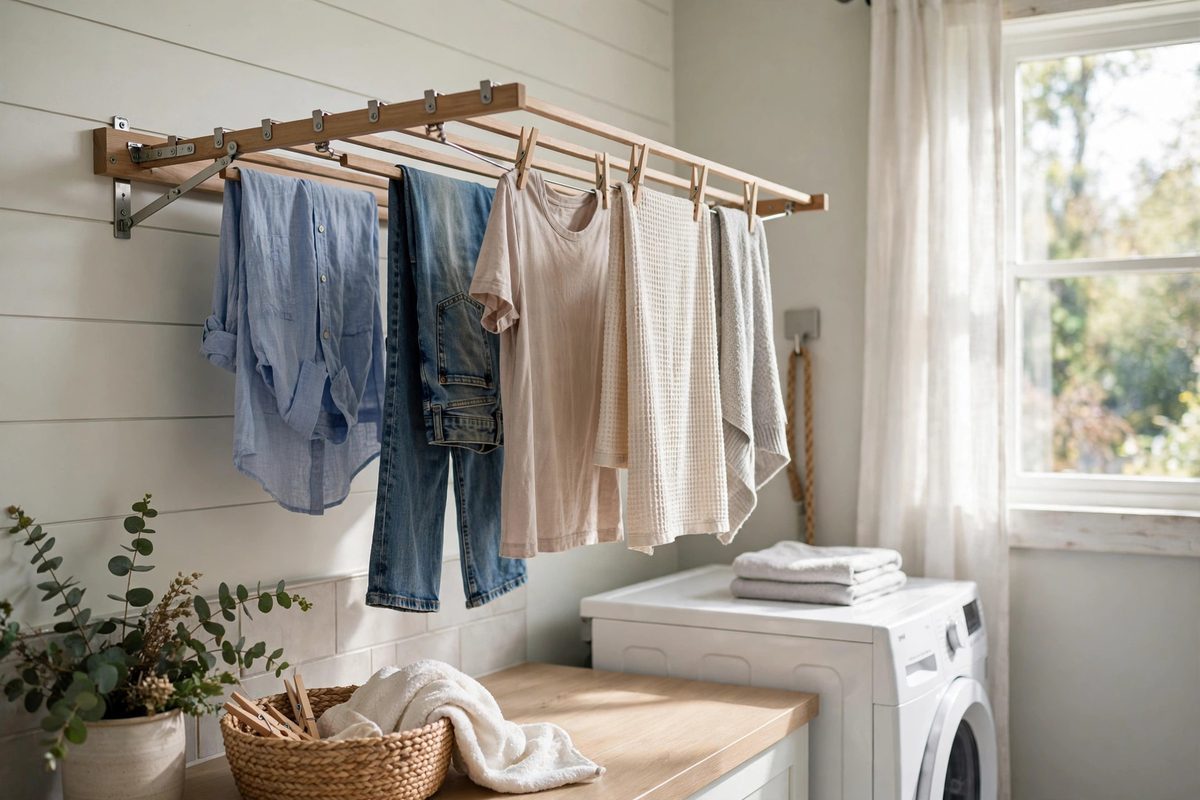
Drying is the step that quietly takes over a laundry room. A floor drying rack left open becomes a permanent piece of furniture. Clothes draped over chairs, doors, and stair rails spread the mess into other rooms. The fix is a drying spot that folds away when it is not needed.
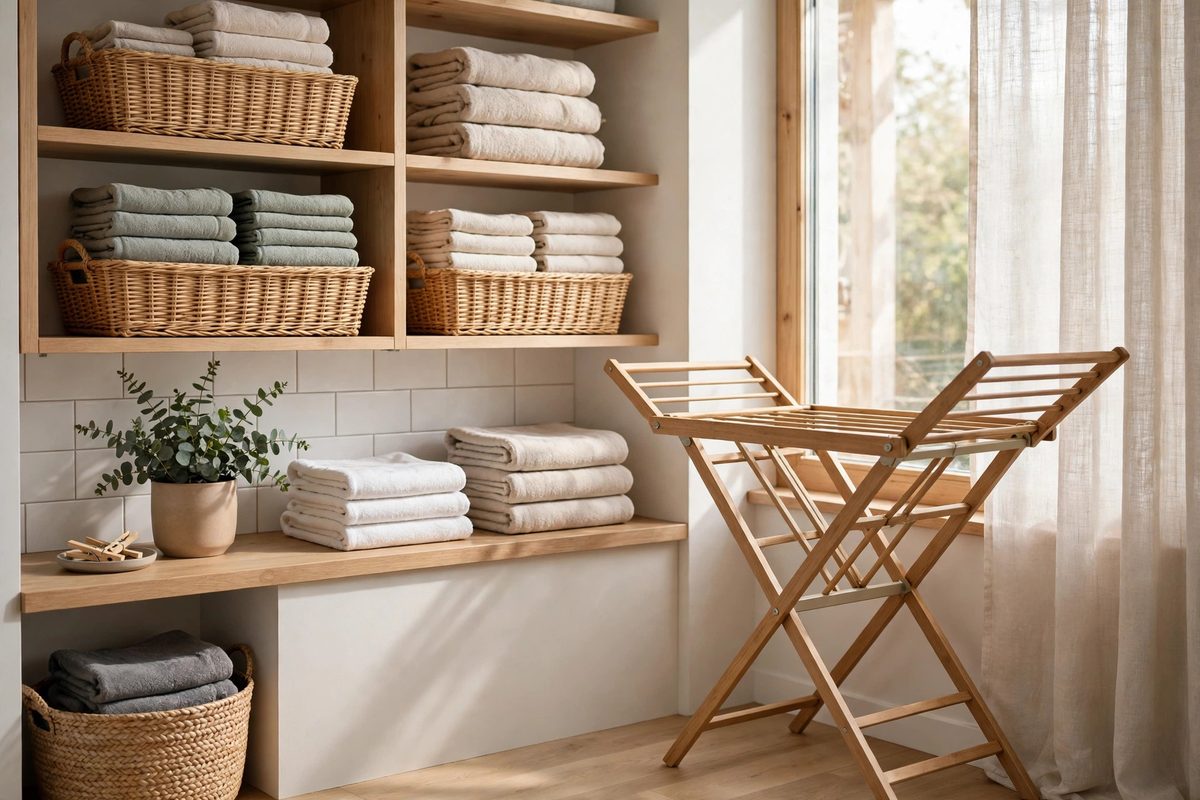
A wall-mounted rack that folds flat against the wall is the best choice for most homes. Hang delicates and air-dry items there, then fold it away when the clothes come down. An over-door rack works in a rental, and a retractable clothesline works in a garage or a spare corner. Keep a small basket or hook for hangers near the dryer, so shirts that need hanging go straight onto a hanger instead of onto a pile. Whatever you choose, give drying a limit: one rack, one rod, or one line. When it is full, the next load waits until the first one is put away, and that limit is what keeps laundry from colonizing the house.
A folding counter and a put-away habit
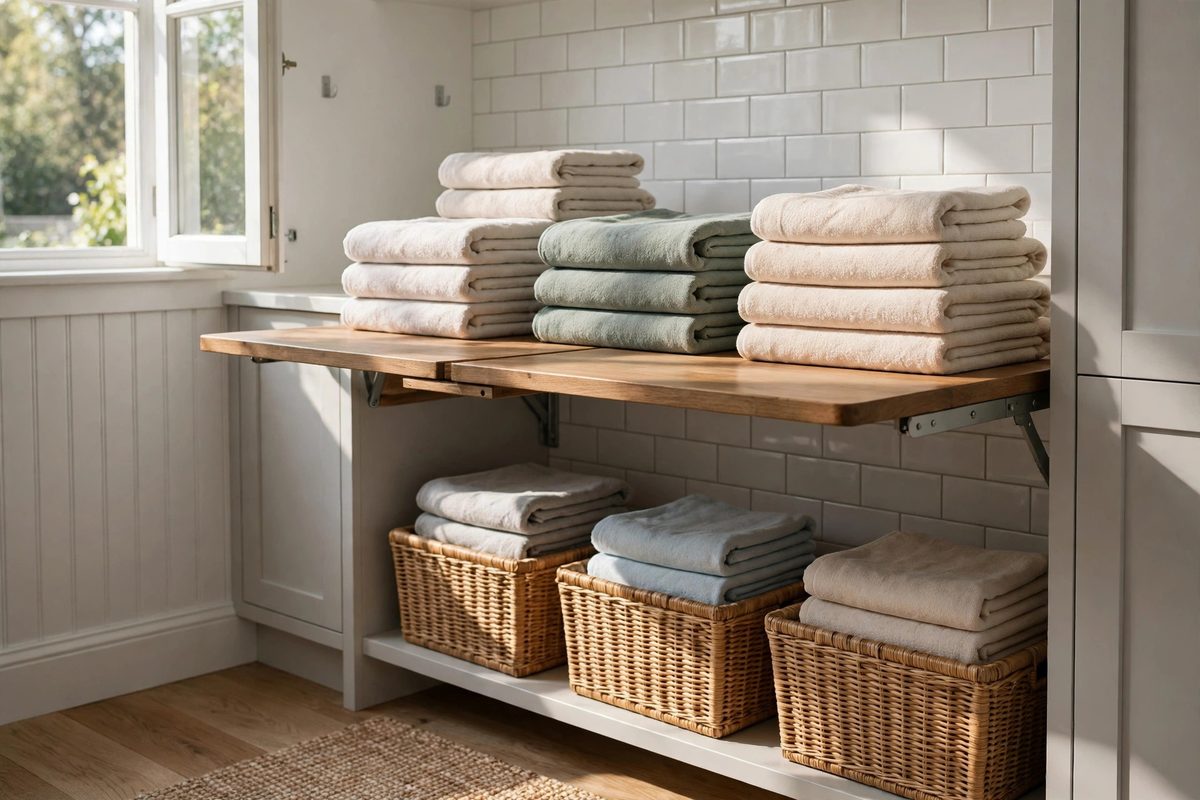
Folding is the part of laundry most people put off, and the reason is usually simple: there is nowhere good to do it. A bed works in a pinch, but clothes folded on a bed tend to stay on the bed. A clear counter, even a narrow one over front-loading machines, changes the habit because folding takes two minutes instead of a whole production.
Keep the counter clear between loads. That means supplies live on a shelf, not on the counter, and clean clothes waiting to be folded live in one basket, not spread across the surface. Fold straight out of the dryer when you can, and put the folded load away the same day. If a load has to wait, it waits in its basket, labeled by person or room if that helps, not in a heap on a chair. The same put-away habit keeps a bedroom calm in our Bedroom Organization Ideas guide, and in a laundry room it is the difference between a room that works and a room that stores clean laundry indefinitely.
Budget laundry organization
You do not need matching containers or a renovated room to fix a laundry space. Some of the best laundry rooms I have seen cost less than a week’s groceries. A thrifted shelf unit holds supplies just as well as a built-in cabinet. Plain glass jars, labeled with tape, turn a messy detergent shelf into a calm one. A secondhand basket per person beats a fancy sorter that nobody uses correctly.
Spend money only where it changes daily life. Sturdy shelves that are mounted properly are worth paying for, because a shelf that sags under detergent bottles helps nobody. So is a sorter with sections your household will actually use. Everything else can be cheap, as long as it is easy to reach and easy to put back. One basket per kind of item beats one big basket for the whole room, because nobody has to dig through towels to find a pair of socks.
The weekly reset and mistakes to avoid
A laundry room does not stay tidy on its own. It stays tidy because someone resets it, briefly and often. The reset takes fifteen minutes, once a week, plus a two minute tidy after each wash day. Wipe the top of the machines. Put supplies back on their shelf. Empty the lint trap and the lost sock spot. Fold or put away any load still sitting in a basket. Check the backstock shelf and note anything running low, so the next shopping trip covers it.
Mistakes to avoid:
- Buying storage before the edit. You will buy the wrong size and fill it with supplies you do not use.
- Open shelves for everything. They look tidy in photos and collect dust, drips, and clutter in real life.
- One big hamper for the whole house. Sorting on the floor is the step that gets skipped.
- A floor drying rack left open all week. It becomes furniture, and the room loses its walking space.
- Skipping the put-away step. Clean laundry in a basket is still laundry that needs a home.
Frequently asked questions
Q: How do I organize a small laundry room with no storage?
A: Go vertical with shelves above the machines, use a slim rolling cart for the gap beside them, and add a wall-mounted drying rack that folds away. Keep daily supplies low and backstock high.
Q: What is the best way to sort laundry?
A: Sort as clothes arrive, not on wash day. A divided sorter with sections for lights, darks, and towels covers most homes, and one basket per person keeps clean clothes from mixing.
Q: Where should I store laundry detergent?
A: Keep everyday detergent in one jar or pump bottle on a shelf within reach of the machines, and store refills and bulky extras on a higher shelf or behind a closed door.
Q: How do I keep the top of the washer and dryer clear?
A: Give supplies a shelf home and keep the machine tops for folding only during a load. A weekly reset that puts stray bottles back on the shelf keeps the habit going.
Q: How often should I declutter the laundry room?
A: Do a two minute tidy after each wash day and a fifteen minute reset once a week. A full edit once a season is enough to catch expired supplies and stray items.
A good laundry room does not ask much of you. It asks for a clear path from dirty to clean to put away, a home for each supply, and a few minutes a week to put things back. Start with the edit, zone the room by task, and let the storage follow the habits you already have. The pile will still come, because laundry always does, but it will move through the room instead of settling in it.
If you want to learn more about how we think about calm, practical systems for real homes, read About Declutter Joy.