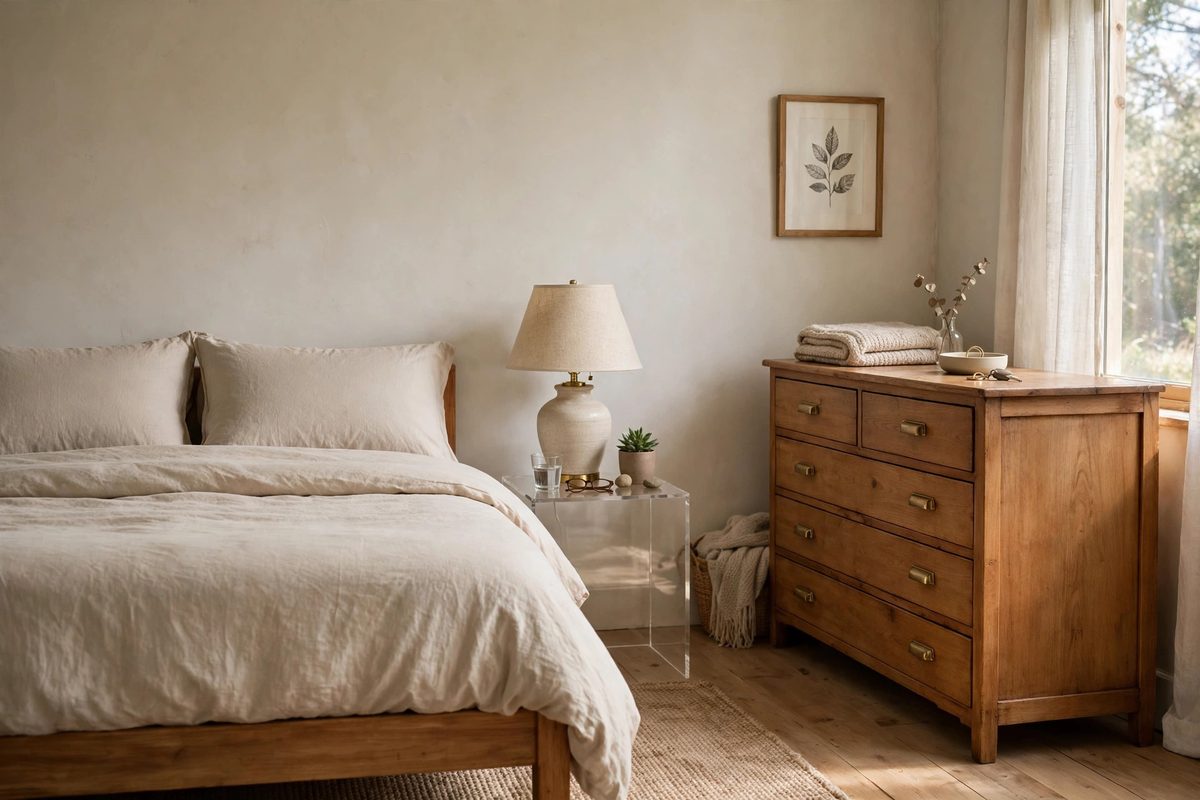
The bedroom is supposed to be the calmest room in the house, and for most of us it is the first room to fall apart. Clothes land on a chair instead of in a drawer. The nightstand collects chargers, books, and half finished glasses of water. The top of the dresser becomes a parking lot for everything that has no other home. And because the bedroom door closes, the mess is easy to ignore until it starts affecting how you sleep.
The fix is not a bigger bedroom or a whole new furniture set. It is a system that fits how you actually use the room. This guide covers bedroom organization ideas that work in real homes, from small apartments to shared family bedrooms, with storage choices, budget fixes, and a reset routine that keeps the room calm without a daily battle.
Table of Contents
- Start with a bedroom edit
- Zone the bedroom by what you do there
- The bed zone: under-bed and bedding storage
- Dressers and drawers that stay tidy
- Nightstands and bedside clutter
- Small bedrooms and shared rooms
- Wall storage: shelves, hooks, and vertical space
- Budget bedroom organization
- The 10-minute reset and mistakes to avoid
- Frequently asked questions
Start with a bedroom edit
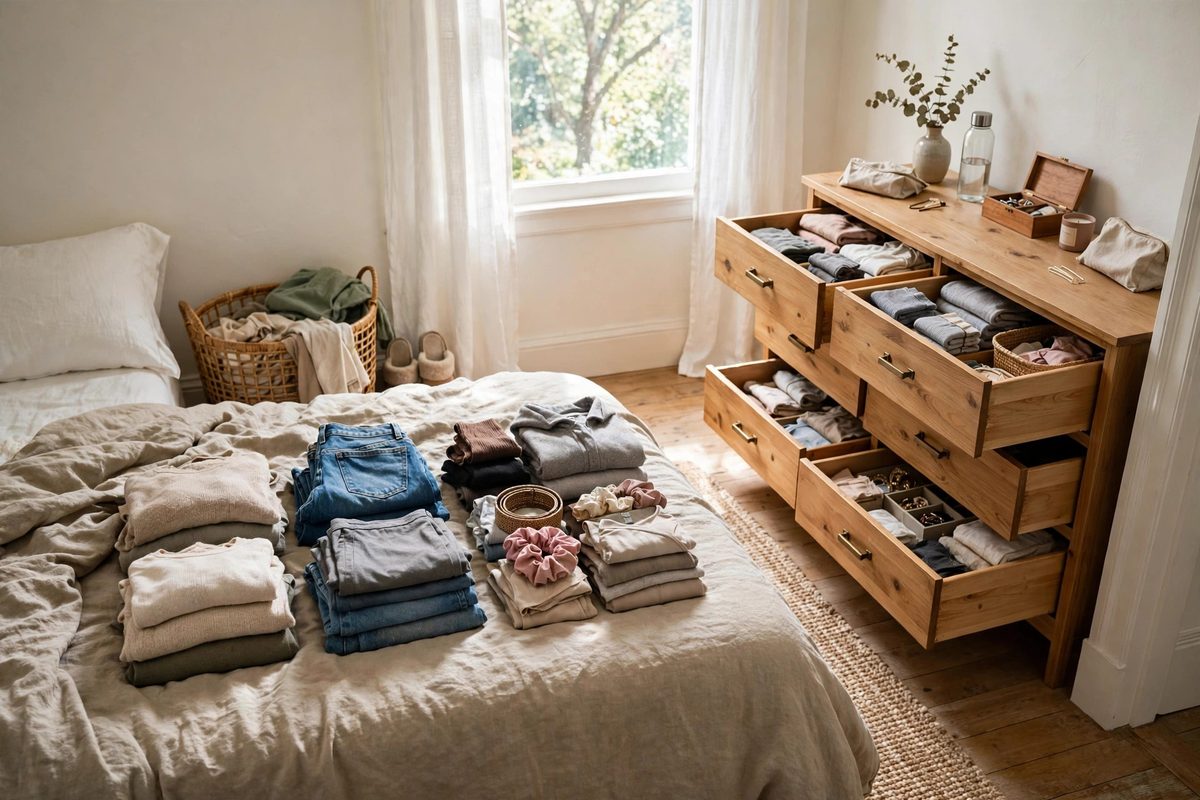
Before you buy a single bin, empty the surfaces and take an honest look at what actually lives in your bedroom. Pull everything off the dresser, the nightstands, and the chair that has become a second closet, and sort it into three groups: things that belong in the bedroom and get used every week, things that belong in another room, and things that do not need to stay in the house at all. You will find the usual suspects. Clothes that no longer fit or that you have not worn in a year. Books you finished months ago. A bag you meant to unpack after a trip. Old chargers for devices nobody owns anymore. Once the room holds only what is used there, you will know exactly how much storage you need, and it will be far less than you feared. The same sort-first rule runs through our guide to Living Room Organization Ideas, and it matters even more in a bedroom, because a room full of extras never feels restful no matter how nicely it is decorated.
Zone the bedroom by what you do there
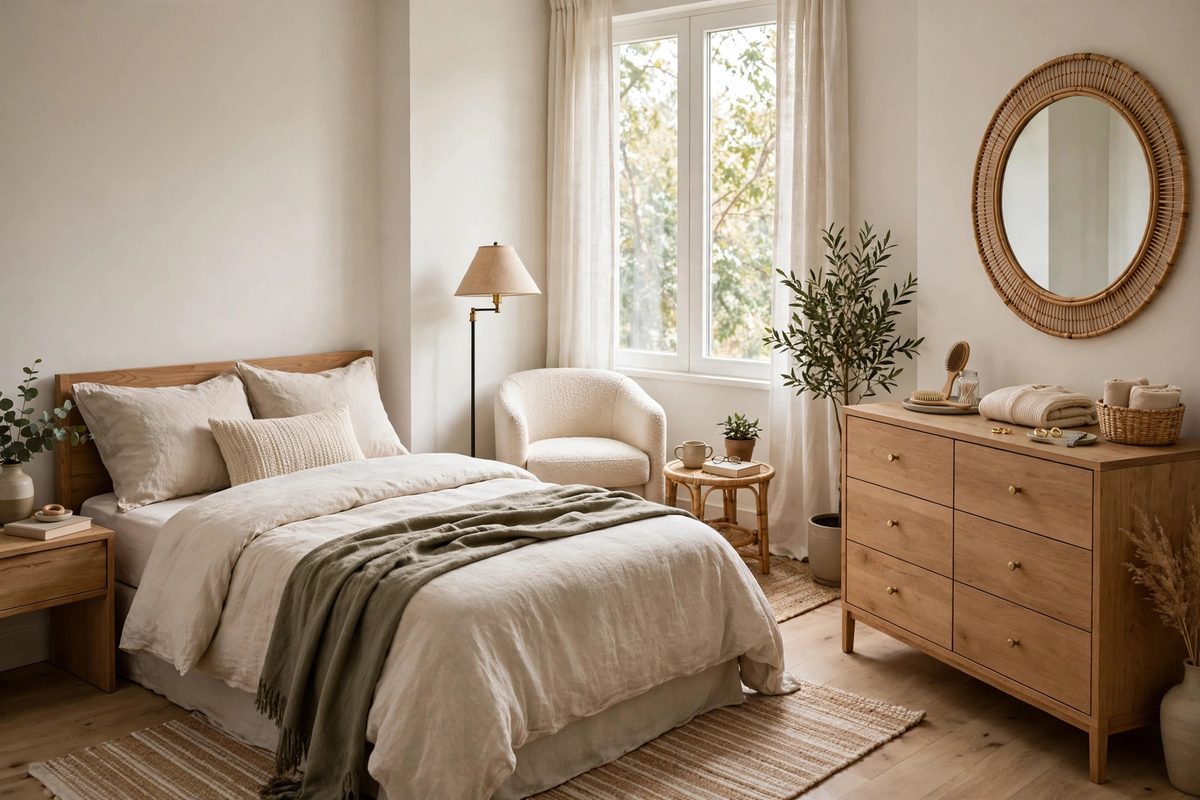
A bedroom works when each activity has a zone, not just a corner where things happen to land. Think about a normal day. You sleep, you get dressed, you read or wind down, and sometimes you work or get ready at a mirror. Each of those needs a small, honest zone. Try four zones. A sleeping zone around the bed, kept clear except for bedding and one throw. A dressing zone at the dresser or closet door, where the clothes you actually wear live within reach. A wind-down zone, a chair or one side of the bed with a lamp and a book, where screens and work do not belong. And a landing zone, one small spot for the things you carry in and out: a watch, keys, or a bag. When every activity has a zone, putting things away takes no thought, and that is why the system sticks after the first week.
The bed zone: under-bed and bedding storage
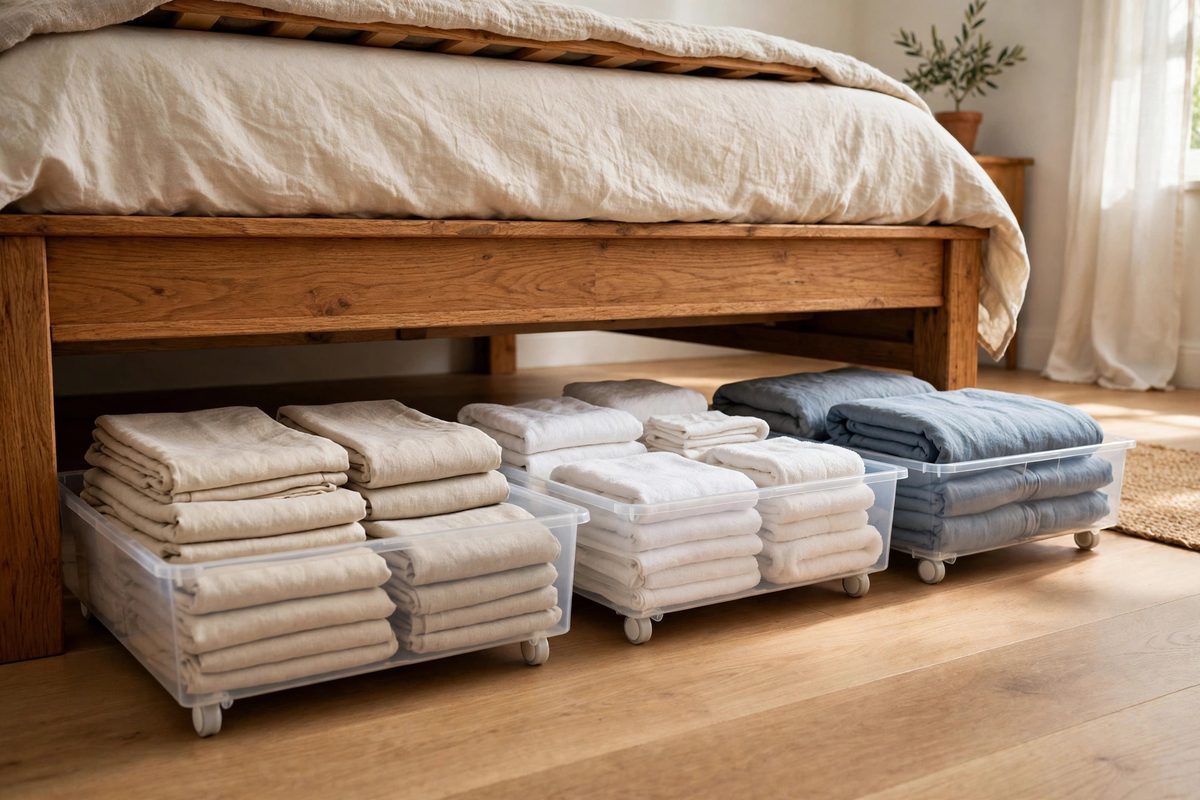
The bed is the biggest piece of furniture in the room, and the space under it is the most wasted storage in most bedrooms. Used well, it holds the bulky things that clutter closets and dressers: spare bedding, off-season clothes, and extra pillows. Used badly, it becomes a dusty dumping ground where nothing can be found. The difference is containers and labels. Shallow rolling bins work better than deep boxes, because you can pull one out without moving the whole bed. One bin for spare sheets, one for off-season clothes, and one for extra blankets is plenty. Label each bin on the end you can see, and keep a simple rule: if you have not opened a bin in a year, its contents get edited next. For bedding itself, keep one spare set per bed, not three. A second set is a backup. A third set is clutter with a nice label.
Dressers and drawers that stay tidy
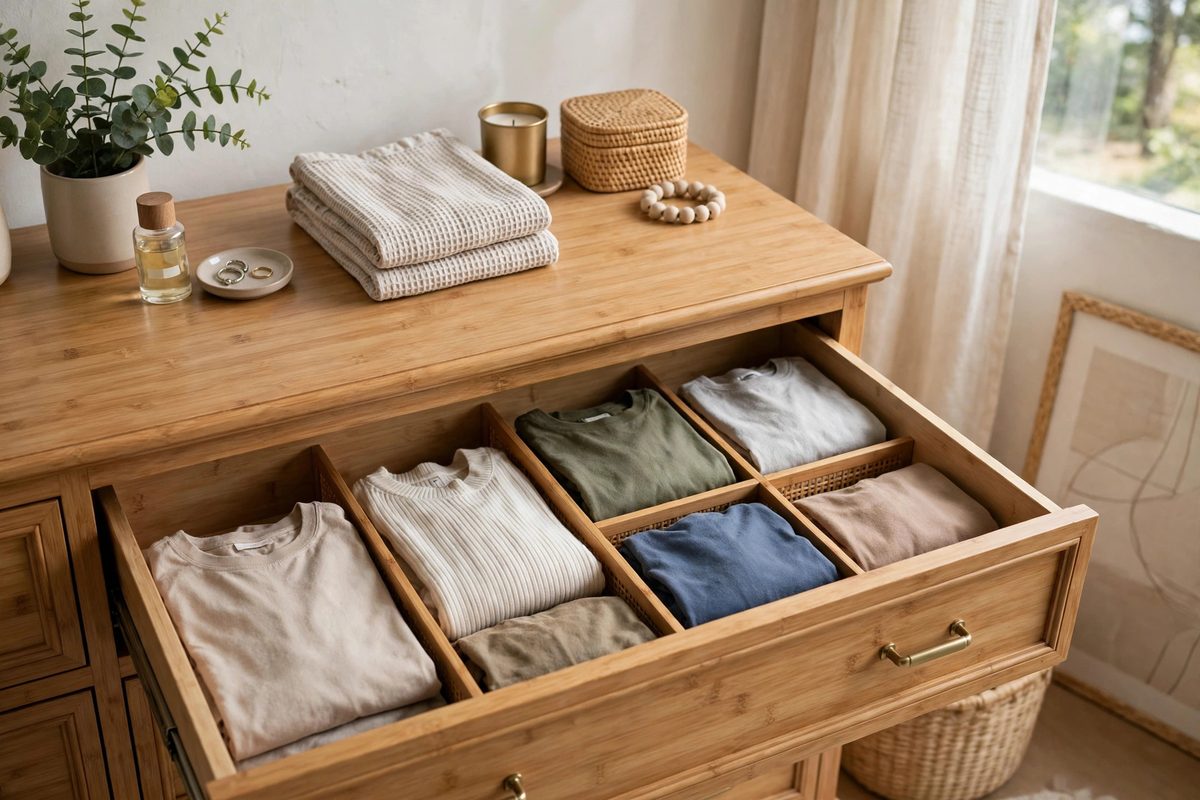
A dresser looks simple, but the wrong setup wastes its space fast. Deep drawers without dividers turn into a pile where the shirt you want is always at the bottom. The fix is boring and it works: dividers, folding that lets you see each item, and a limit on how much each drawer holds.
| Piece | Best for | Typical cost | Watch out for |
|---|---|---|---|
| Under-bed rolling bins | Spare bedding and off-season clothes | $25-$70 for a set | Deep boxes become hard to pull out |
| Drawer dividers | Dressers and deep drawers | $15-$40 per drawer | Dividers that slide need a snug fit |
| Storage bed frame | Small rooms with no spare closet | $250-$700 | Measure the lift clearance first |
| Tall narrow shelf | Books, baskets, and folded clothes | $80-$250 | Top shelves get forgotten, keep daily items low |
| Wall hooks + shelf | Bags, hats, and tomorrow’s outfit | $20-$80 | Hooks pile up if there is no limit per hook |
Quick pick guide:
- You have a small room: under-bed bins, one tall narrow shelf, and drawer dividers. Nothing bulky, nothing that blocks the walking path to the door.
- You share the room: one drawer stack or one dresser section per person, plus one hook per person for tomorrow’s outfit.
- You want a calm, tidy look above all: closed storage everywhere, one open shelf for display only, and a strict rule that dresser tops stay clear overnight.
- You rent and cannot drill: freestanding shelves, over-door hooks, and rolling bins you can take with you when you move.
Fold clothes so they stand up in the drawer, like files in a folder, instead of stacking them flat. You will see everything at a glance, and you will stop pulling out three shirts to reach the one on the bottom. Keep one drawer, or one section of a drawer, empty if you can. That empty space is what lets you put laundry away without a fight.
Nightstands and bedside clutter
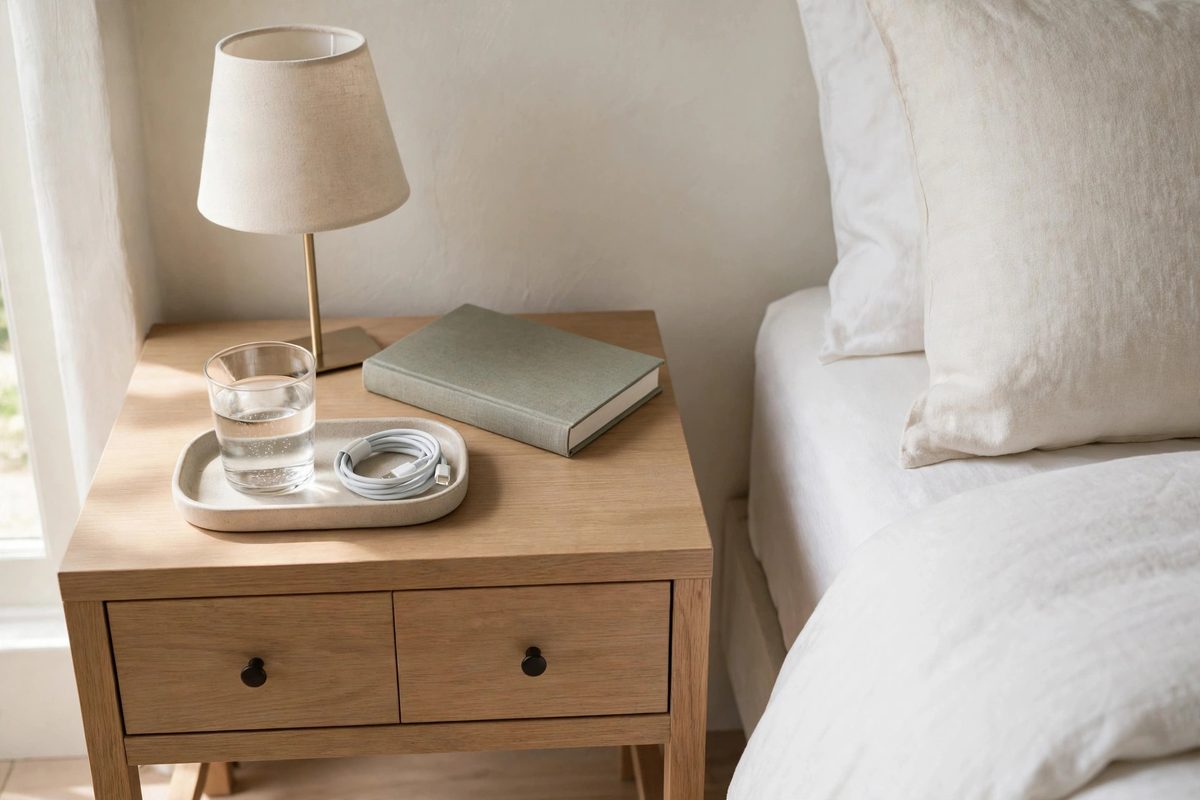
Nightstands are small, so they attract clutter fast. A phone charger, a book, a glass of water, lip balm, a remote, and yesterday’s mail can cover the whole surface in a day. The fix is a limit, not willpower. A nightstand gets one tray or one small basket, and the tray holds only what belongs there: a lamp, the book you are reading right now, and a charger. Everything else needs a different home. Books you have finished go back to a shelf. Mail gets sorted somewhere else, not beside the bed. Keep one charger at the bedside, in the tray, and move the rest to a desk or a kitchen drawer. If you share the bed, each person gets their own nightstand or their own side of a shared one, with the same limit. A clear nightstand makes the whole room feel calmer at night, which is worth more than any fancy bedding set.
Small bedrooms and shared rooms
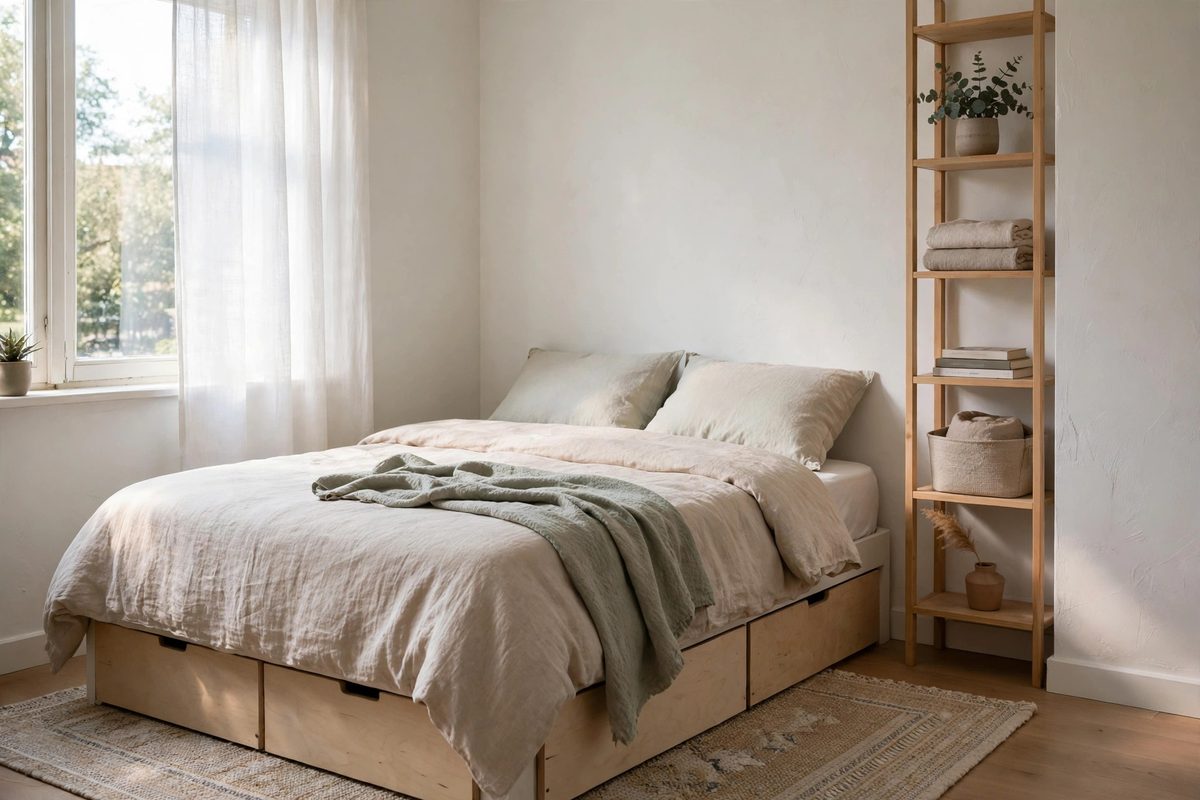
A small bedroom can still work, but it has to be honest about its size. If the room also serves as a home office or a guest space, that is fine, as long as each job has a boundary. A rug can mark the sleeping zone. Wall shelves can hold books and baskets without eating floor space. A tall, narrow shelf holds more than a low, wide one and takes less floor. Go vertical before you go wider. Use the wall above the dresser for a shelf, and the wall by the door for hooks. Keep one rule that saves small rooms: if something new comes into the bedroom, something old leaves it. The same small space logic we used for a vanity in our Makeup Vanity Organization Ideas guide applies here. Keep the footprint small, go vertical, and give everything one home. In a shared room, add one more rule: each person’s things stay in their own zone, so nobody has to dig through someone else’s clothes to find their own.
Wall storage: shelves, hooks, and vertical space
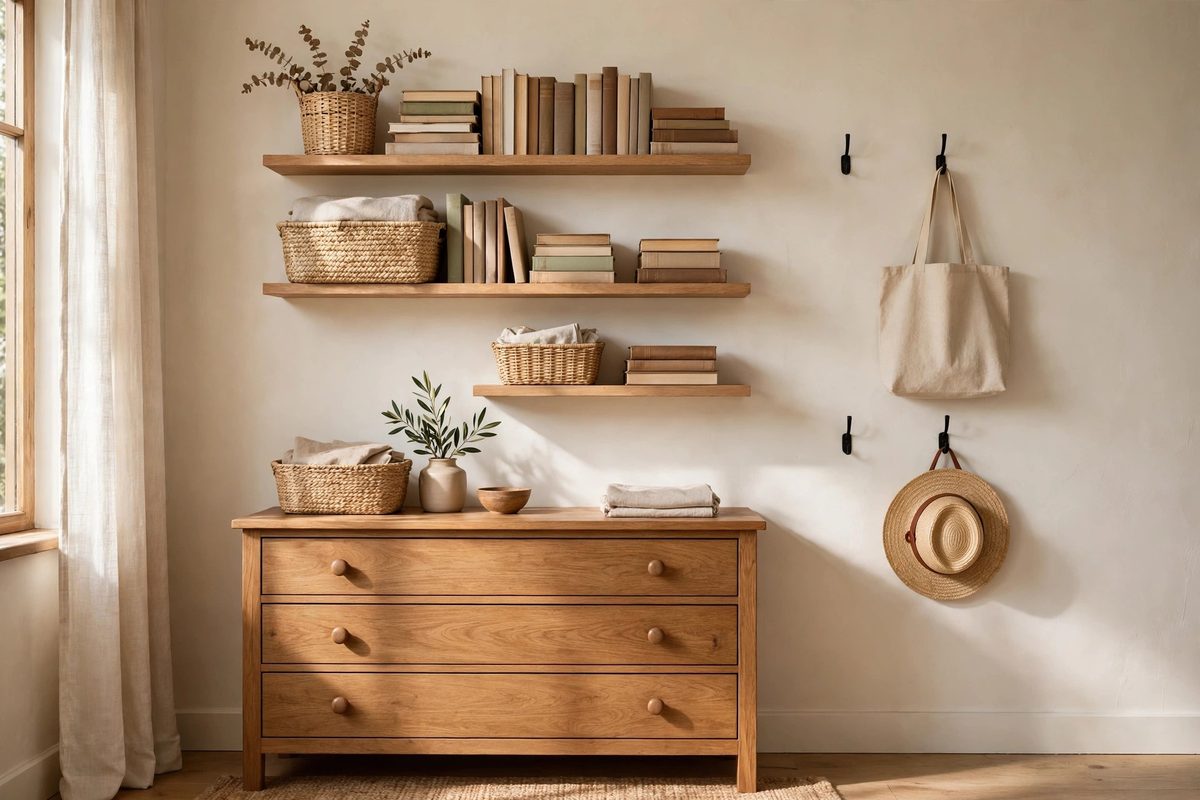
Walls are the most underused storage in a bedroom. A shelf above the dresser, a row of hooks by the door, and a small shelf beside the bed can hold as much as a whole extra piece of furniture, without taking a single inch of floor. Use walls for three things. Shelves for books, baskets, and folded clothes you reach for often. Hooks for bags, hats, and tomorrow’s outfit, hung the night before so mornings are faster. And one display spot, a single shelf or a small ledge, for the few things you actually want to look at. Everything else should live behind a drawer or a bin door. Open shelving everywhere looks airy in photos and collects dust and clutter in real life, so keep open storage to one or two spots and close the rest away. The same vertical thinking helped the tight hallway in our Entryway Organization Ideas guide, and it works just as well beside a bed.
Budget bedroom organization
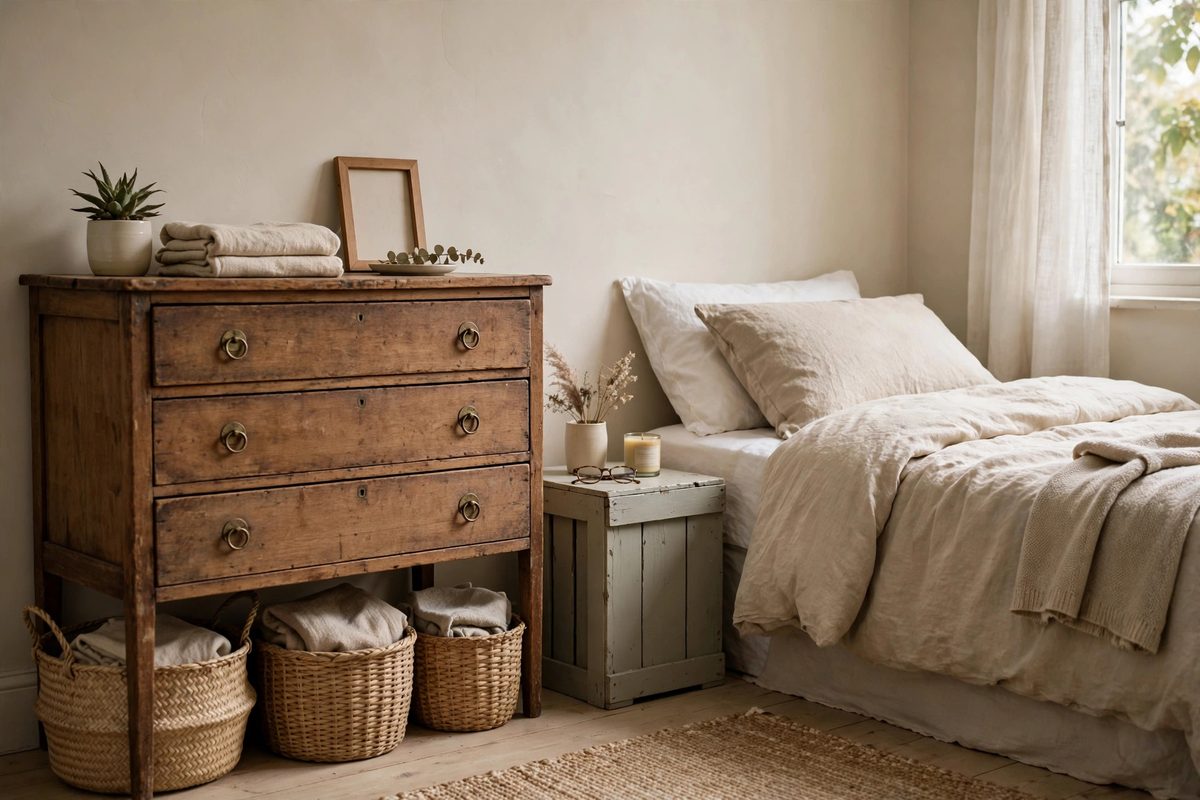
You do not need matching furniture to fix a bedroom. Some of the best bedrooms I have seen cost less than a dinner out. A thrifted dresser with drawer dividers does the job of a new storage system. A plain wooden crate, painted one calm color, works as a bedside shelf. A secondhand tall shelf with baskets hides more clutter than a brand new open unit ever will. Spend money only where it changes daily life. Sturdy under-bed bins that actually roll are worth paying for. So are drawer dividers that fit snugly and do not slide around. Everything else can be cheap, as long as it is easy to reach and easy to put back. One bin per kind of item beats one big bin for the whole room, because nobody has to dig through spare sheets to find a pair of socks.
The 10-minute reset and mistakes to avoid
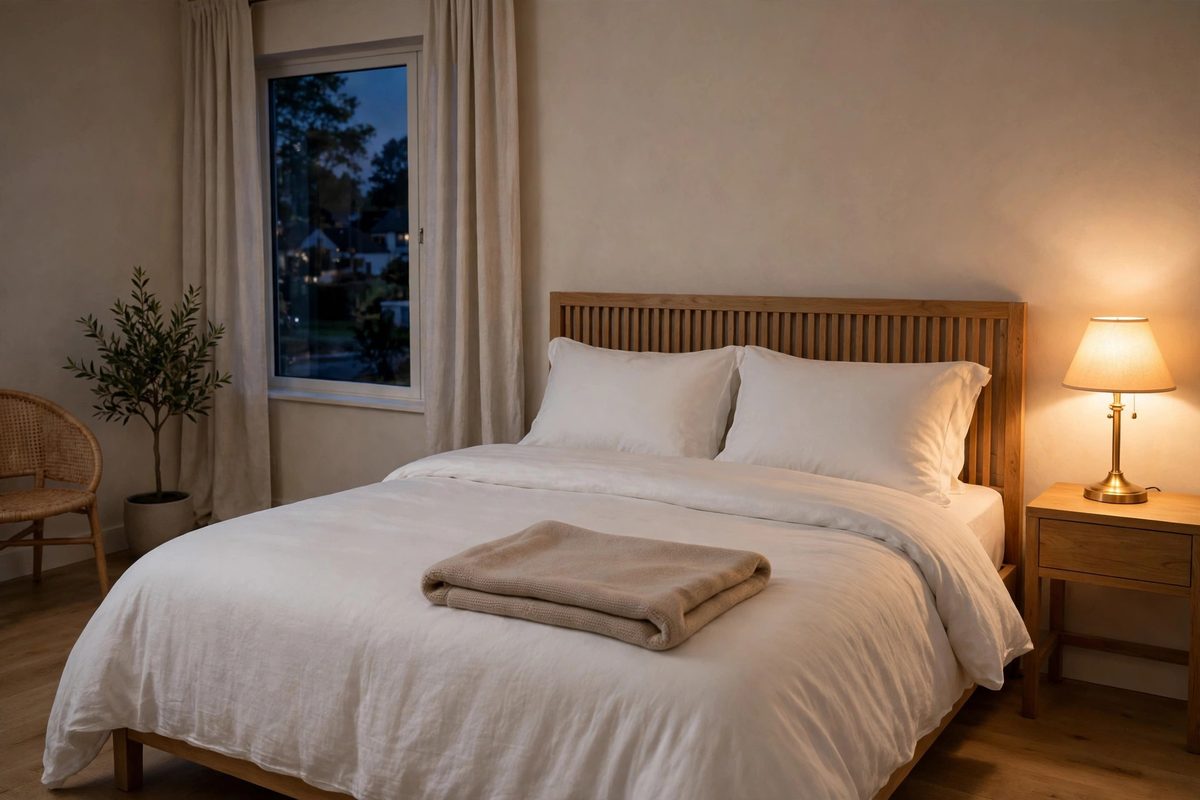
A bedroom does not stay tidy on its own. It stays tidy because someone resets it, briefly and often. The reset takes ten minutes, once a day, ideally in the evening or right after making the bed. Bed made. Clothes off the chair and into a drawer or the laundry basket. Nightstand cleared back to its tray. Anything that belongs elsewhere goes to its room on your next trip through the house. That is it. A daily ten minute reset beats a weekend deep clean every time, because the pile never gets big enough to feel hopeless.
Mistakes to avoid:
- Buying storage before the edit. You will buy the wrong size and fill it with things that do not belong in the room.
- Open shelving everywhere. It looks airy in photos and collects dust and clutter in real life.
- One big bin for everything. It becomes a digging pit, and socks go missing in it.
- No home for chargers and bedside items. Small things scatter, and mornings start with a search.
- Skipping the nightly reset. One skipped day becomes a week, and the room slides back to where it started.
Frequently asked questions
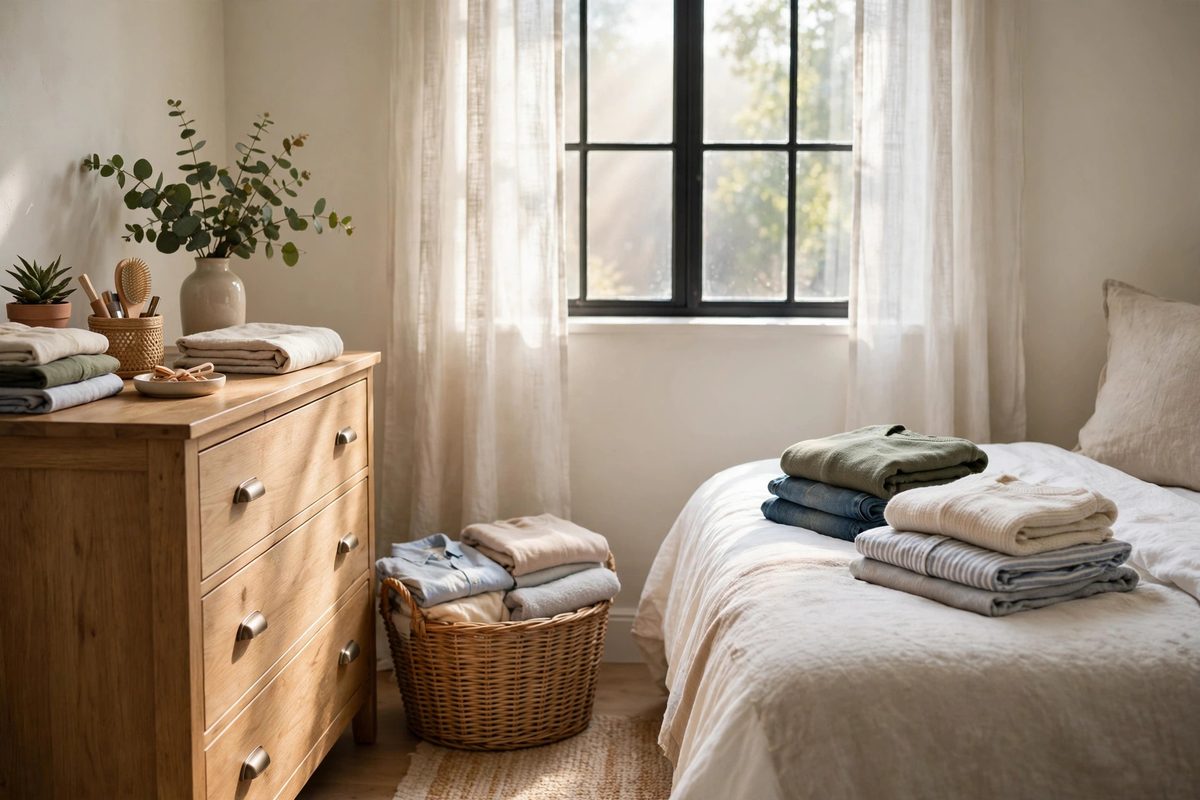
Q: How do I organize a small bedroom with no closet space? A: Use under-bed bins, a tall narrow shelf, and wall hooks. Keep one spare bedding set, fold clothes so they stand in drawers, and follow one rule: if something new comes in, something old leaves.
Q: What is the best storage for under the bed? A: Shallow rolling bins, one per kind of item: spare sheets, off-season clothes, and extra blankets. Label the visible end, and do not store anything there you need every day.
Q: How do I keep my dresser drawers tidy? A: Use dividers, fold clothes so they stand like files, and keep each drawer about three quarters full. An overstuffed drawer is a drawer that will not stay tidy for a week.
Q: How do I stop clutter from piling on my nightstand? A: Give the nightstand one tray and a strict limit: a lamp, the book you are reading, and one charger. Everything else, including finished books and mail, belongs somewhere else.
Q: How often should I declutter my bedroom? A: Do a quick reset daily, a ten minute tidy that puts everything back in its zone, and a full edit once a season. That rhythm keeps the room working without a big overhaul.
A good bedroom does not ask much of you. It asks for a home for each thing, a limit on how much lives there, and ten minutes a day to put things back. Start with the edit, zone the room by what you actually do there, and let the storage follow the habits you already have. The room will feel calmer, and a night at home will feel like a rest instead of a reminder of the mess.
If you want to learn more about how we think about calm, practical systems for real homes, read About Declutter Joy.