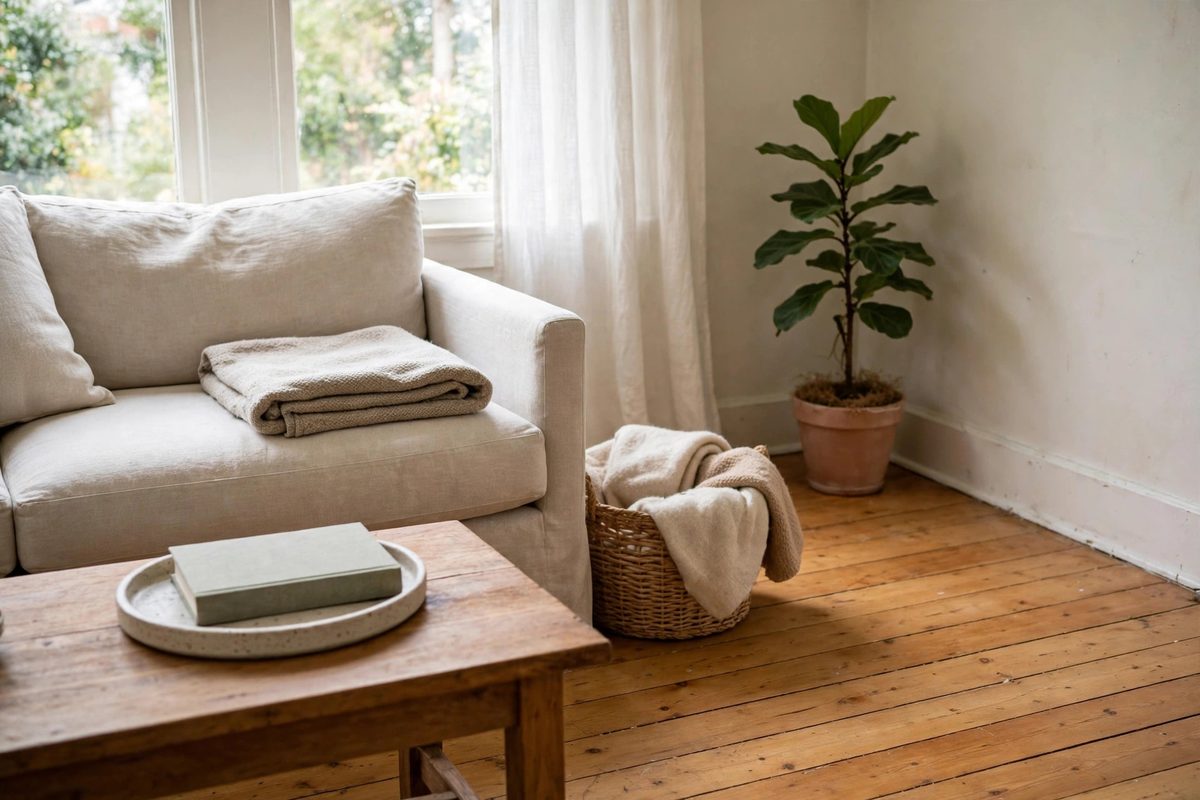
The living room is where real life happens, which is exactly why it is so hard to keep tidy. It is a TV room, a reading room, a homework spot, a place for guests, and a landing zone for everything that does not have a home somewhere else. Mail lands on the coffee table. Blankets pile on the sofa arm. Remote controls vanish into the cushions. And because everyone in the house uses the room, everyone contributes to the mess, usually without meaning to.
The fix is not a bigger living room or a whole new set of furniture. It is a system that fits how your household actually lives in the room. This guide covers living room organization ideas that work in real homes, from small apartments to busy family rooms, with storage choices, budget fixes, and a reset routine that keeps the room ready for a surprise guest.
Table of Contents
- Start with a living room edit
- Zone the room by what you do there
- Seating and storage furniture that earns its place
- Small living rooms and apartments
- The media wall: TV, cables, and remotes
- Surfaces that stay clear: coffee tables and side tables
- Shared living rooms: kids, pets, and guests
- Budget living room organization
- The 10-minute reset and mistakes to avoid
- Frequently asked questions
Start with a living room edit
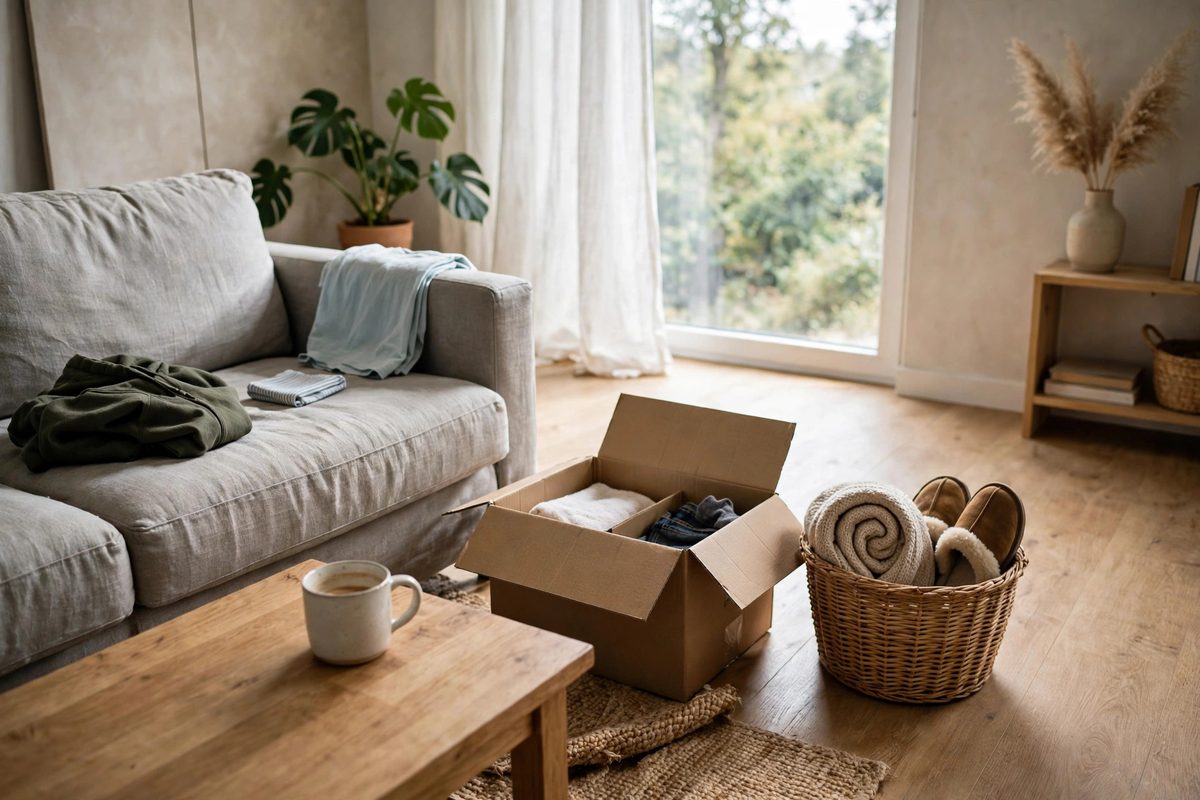
Before you buy a basket or a new console, empty the surfaces and take a hard look at what actually lives in your living room. Pull everything off the coffee table, the side tables, and the open shelves, and sort it into three groups: things that belong in the living room and get used every week, things that belong in another room, and things that do not need to stay in the house at all.
You will find the usual suspects. A stack of mail that should have been sorted at the door. A charger for a device nobody owns anymore. A pile of magazines from three months ago. Kids toys that migrated from a bedroom. Once the room holds only what is used there, you will know exactly how much storage you need, and it will be far less than you feared. The same sort-first rule runs through our guide to Entryway Organization Ideas, and it matters just as much here, because the living room collects clutter from the whole house.
Zone the room by what you do there
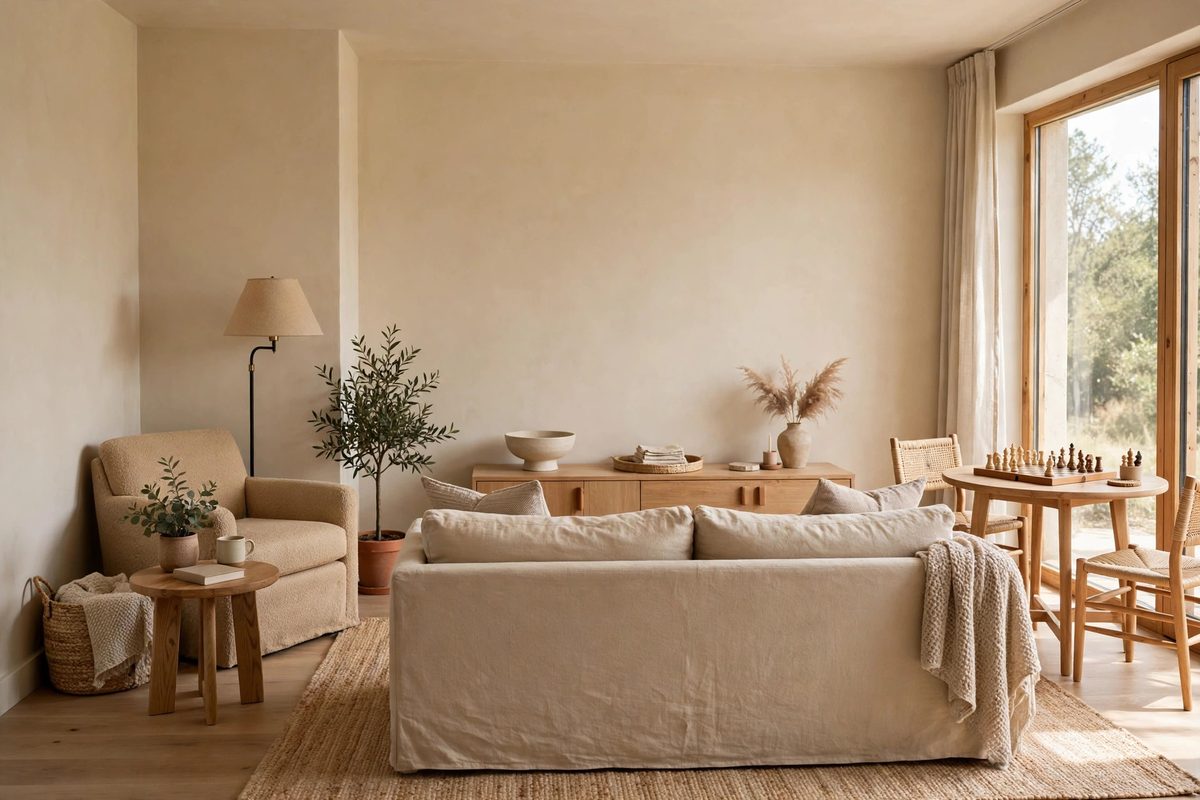
A living room works when each activity has a zone, not just a corner where things happen to land. Think about a normal evening. Someone watches TV. Someone reads. Someone plays a game. Someone scrolls on a phone while half watching a show. Each of those needs a small, honest zone.
Try four zones. A seating zone around the sofa, with a place for remotes, a drink, and a throw. A reading zone, a chair with a lamp and a small table, even if it is just one corner of the room. A media zone, where the TV, consoles, and cables live behind closed doors if you can manage it. And a play or hobby zone, one basket or shelf, so games, crafts, and toys have a boundary. When every activity has a zone, putting things away takes no thought, and that is why the system sticks after the first week.
Seating and storage furniture that earns its place
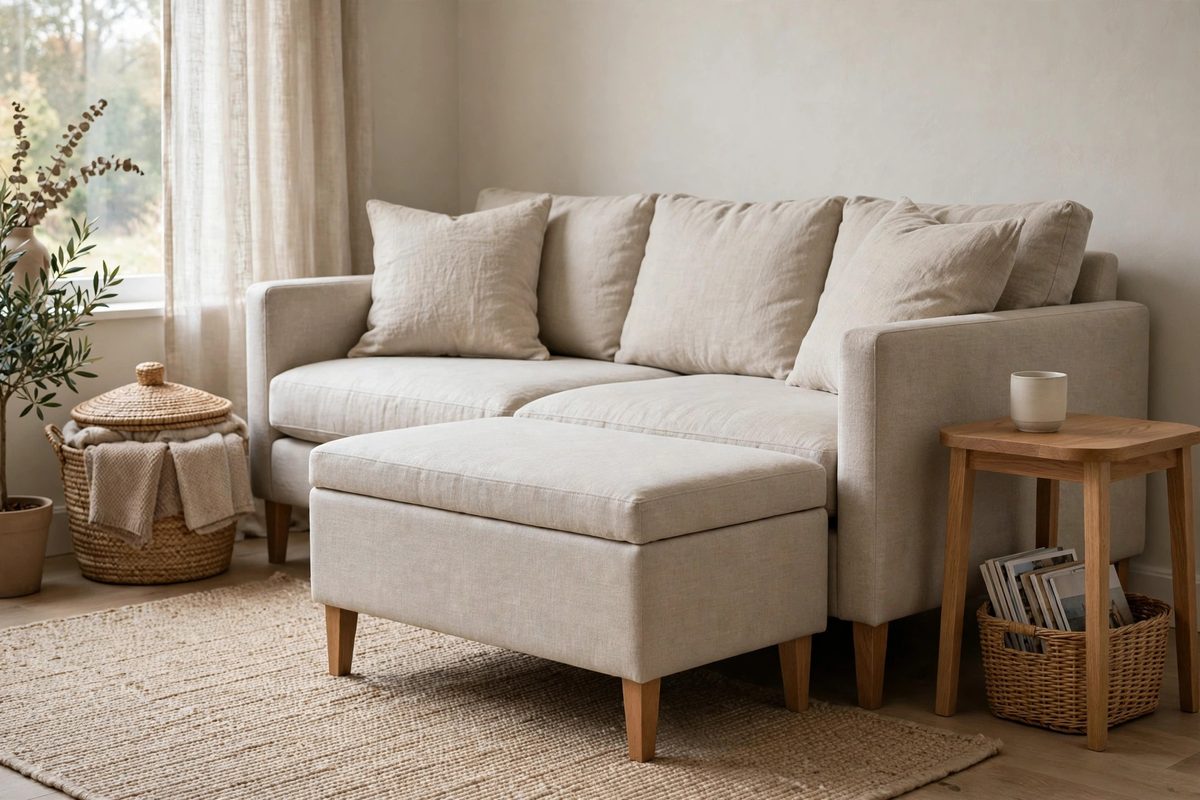
Living room furniture looks simple, but the wrong piece wastes floor space and adds clutter instead of hiding it. A giant sectional can swallow a small room. An open bookshelf looks great in a photo and becomes a dust trap in real life. Pick by your room and your habits, not by the showroom.
| Piece | Best for | Typical cost | Watch out for |
|---|---|---|---|
| Storage ottoman | Blankets, remotes, and small toys | $60-$200 | A huge ottoman blocks the walking path |
| Closed media console | TVs, consoles, and cable clutter | $150-$400 | Measure your TV and consoles first |
| Lidded baskets | Throws, magazines, and kids items | $20-$60 each | Open baskets become visible clutter fast |
| Bookshelf with doors | Books, games, and hobby supplies | $120-$350 | Open shelves need regular dusting and editing |
| Slim side table + tray | Small rooms and reading corners | $40-$120 | No real storage, so pair it with a basket |
Quick pick guide:
- You have a small room: a storage ottoman, one lidded basket, and a slim side table. Nothing bulky, nothing with doors that swing into the path.
- You have kids or a busy family: a closed media console, one basket per kind of toy or game, and a washable throw you can actually wash.
- You want a calm, tidy look above all: closed storage everywhere, one open shelf for display only, and a strict rule that flat surfaces stay clear overnight.
- You rent and cannot drill: freestanding shelves, a rolling cart for hobby supplies, and furniture you can take with you when you move.
Small living rooms and apartments
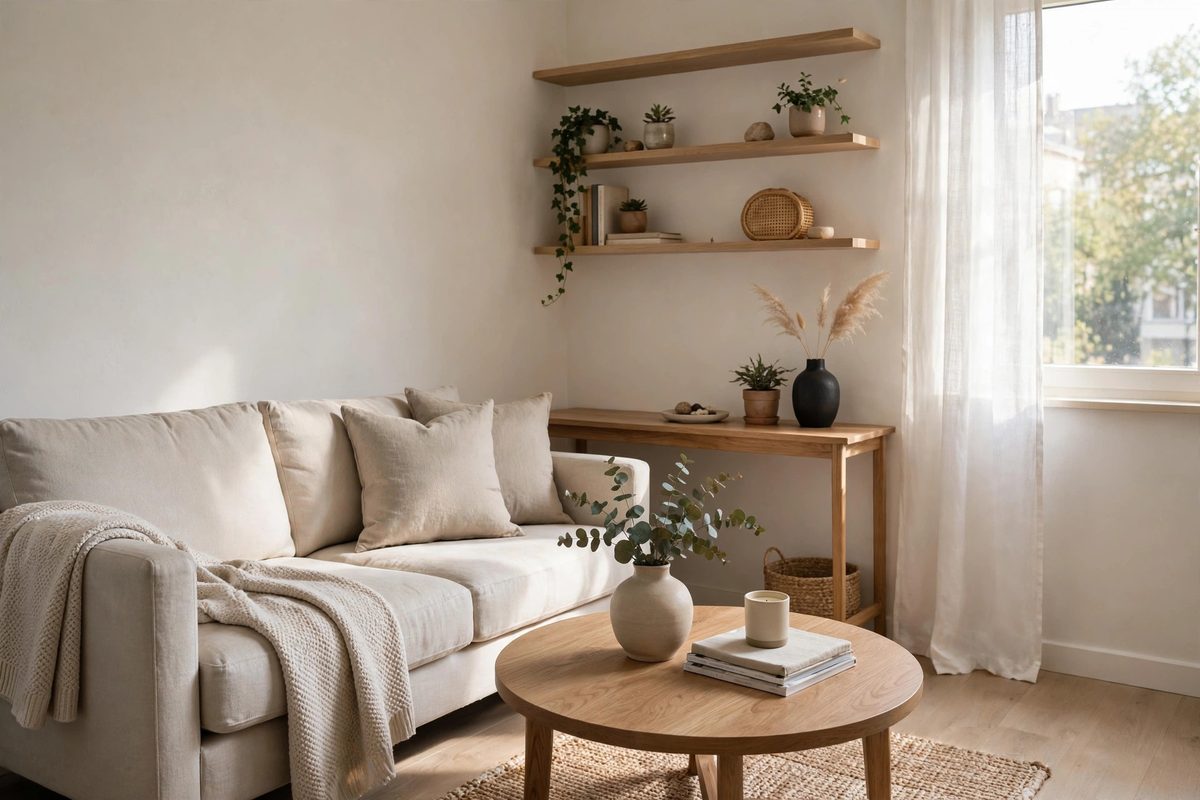
A small living room can still work, but it has to be honest about its size. If the room also serves as a dining area or a home office corner, that is fine, as long as each job has a boundary. A rug can mark the seating zone. Wall shelves can hold books and plants without eating floor space. A round coffee table is easier to walk around than a square one in a tight room.
Go vertical before you go wider. A tall, narrow shelf holds more than a low, wide one and takes less floor. Use the wall beside the sofa for a small shelf or a row of hooks for bags and headphones. And keep one rule that saves small rooms: if something new comes into the living room, something old leaves it. The same small space logic we used for a vanity in our Makeup Vanity Organization Ideas guide applies here. Keep the footprint small, go vertical, and give everything one home.
The media wall: TV, cables, and remotes
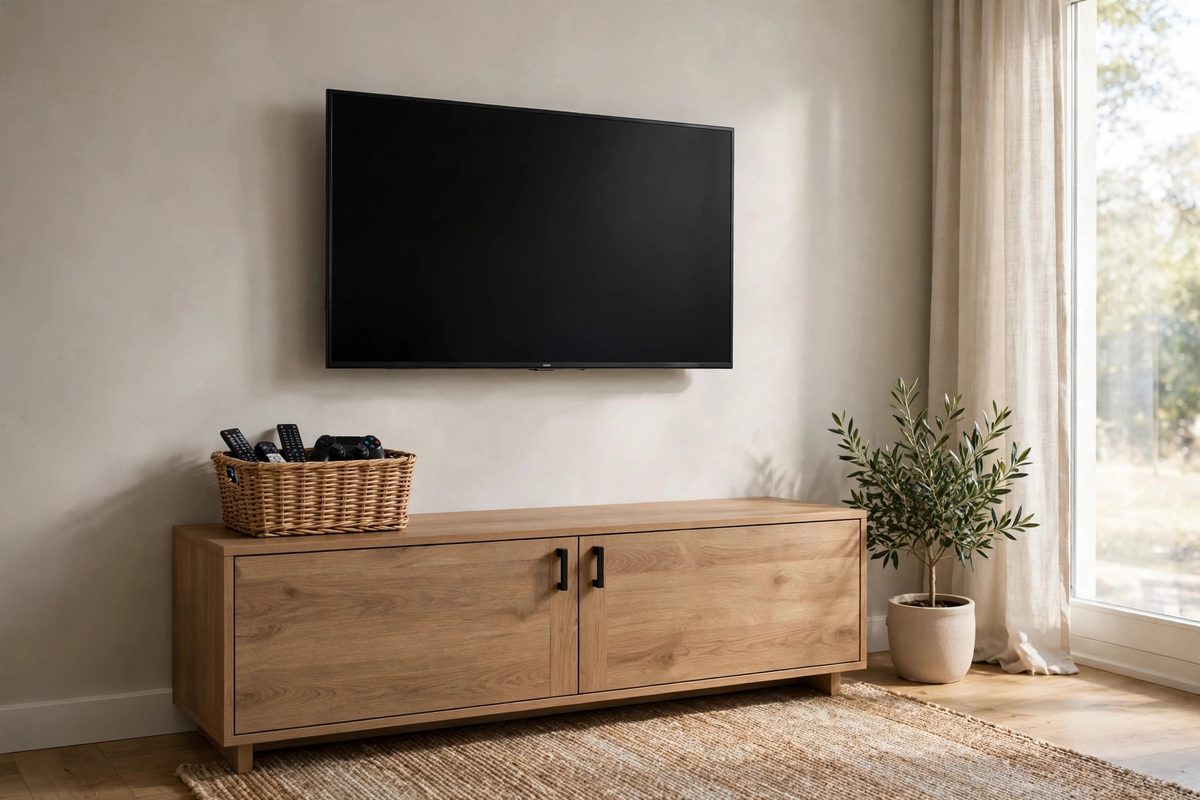
The media wall is where most living rooms fall apart, because cables multiply and remotes breed. Start by counting what actually connects to the TV. A streaming box, a game console, a soundbar, and a charger or two is a normal setup, and it should fit in one closed console with room to spare. If it does not fit, that is a sign to remove something, not to buy a bigger console.
Bundle cables with simple ties and run them behind the console, not across the floor. Put all the remotes in one place, a small tray on the console or a pocket on the sofa arm, and make it the only place remotes ever go. Keep one charger in the living room, in a basket or a drawer, and move the rest to a bedroom or an office. A media wall with closed doors hides the mess you cannot fully eliminate, and that is a perfectly good system.
Surfaces that stay clear: coffee tables and side tables
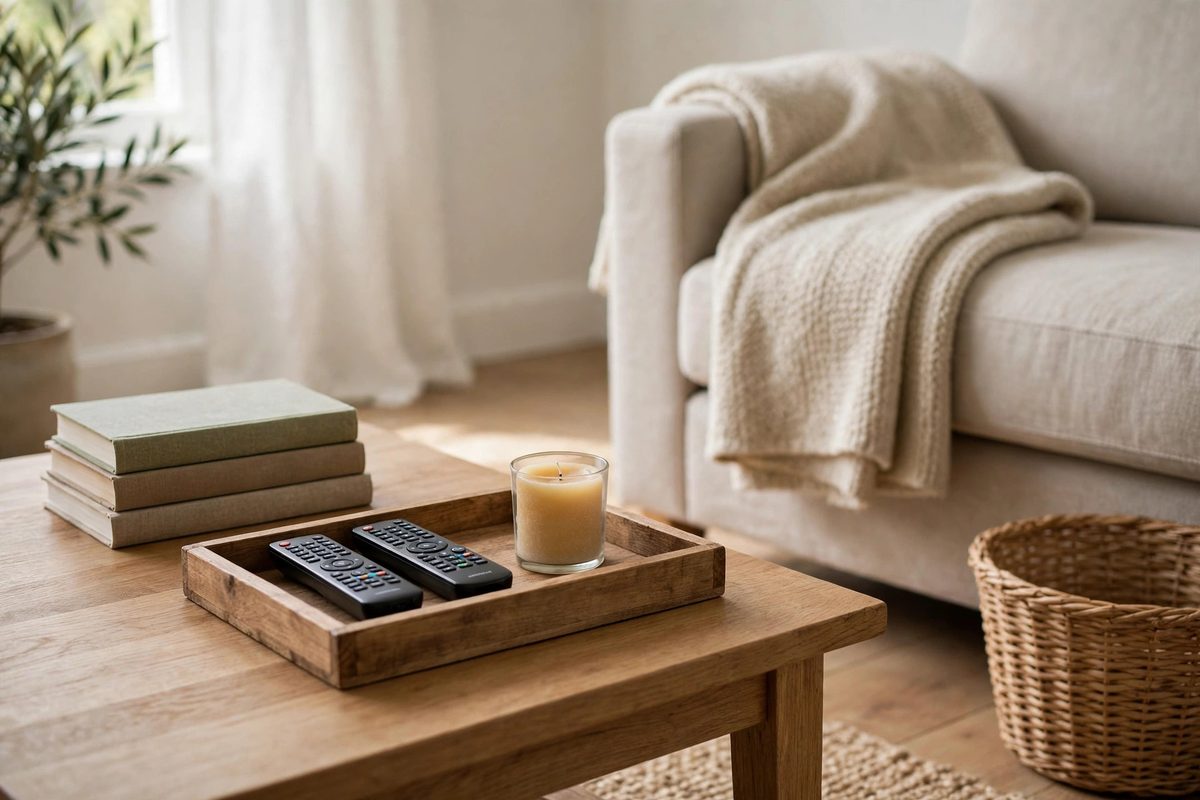
Flat surfaces attract clutter because they are easy. You put something down for a second and it stays for a week. The fix is a limit, not willpower. A coffee table gets one tray, and the tray holds only what belongs there: remotes, a candle or a small plant, and the book you are reading right now. Everything else lives somewhere else.
Side tables get the same treatment. One lamp, one drink coaster, and one small basket underneath for the things you reach for in that chair. A charging station belongs in one spot, not on every table. If mail keeps landing on the coffee table, that is a sign the entryway landing spot needs work, not a sign you need a bigger coffee table. Clear surfaces make the whole room look tidy even when a basket or two is full, which is a useful trick on a busy day.
Shared living rooms: kids, pets, and guests
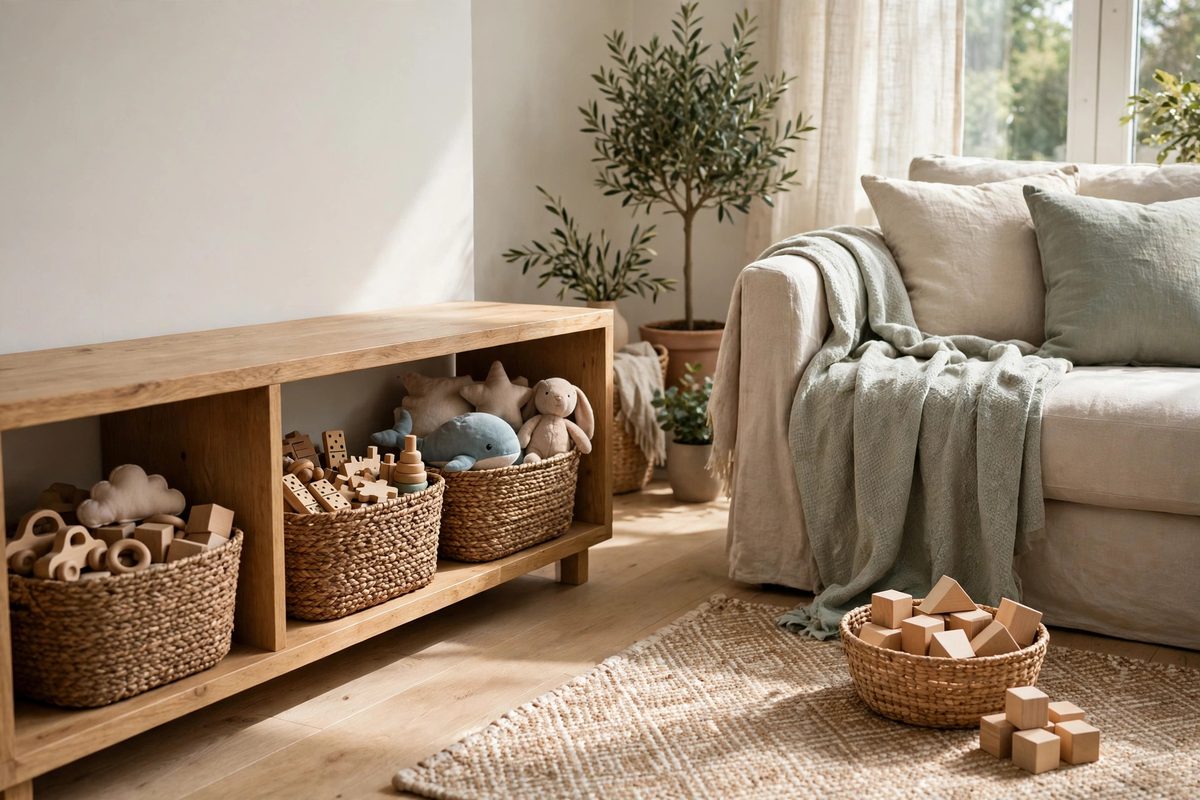
A shared living room has to work for people with very different needs, and the kindest system is one with clear boundaries. Give kids one basket or one shelf for the toys that live in the living room, and rotate the rest. When the basket is full, something has to go back to the bedroom before anything new comes out. That single rule stops toy creep better than any lecture.
For pets, keep their things in one zone: a basket for toys, a mat for food and water if they eat in the room, and a washable throw on their favorite sofa spot. Guests need even less. A clear seat, a place to put a drink, a throw if the evening gets cool, and a walking path that is not blocked by an ottoman or a toy bin. A room that works for guests on a normal Tuesday is a room that is ready for a holiday gathering without a panic clean.
Budget living room organization
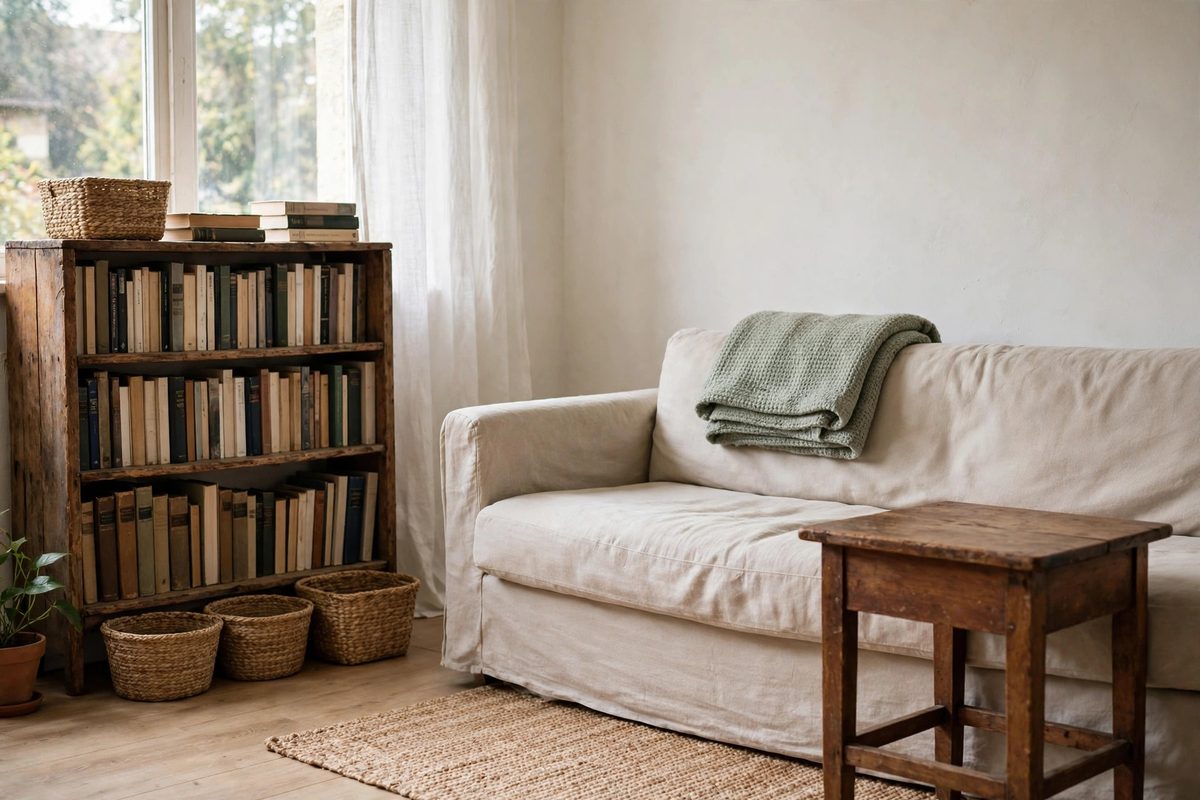
You do not need matching furniture to fix a living room. Some of the best living rooms I have seen cost less than a dinner out. A thrifted side table with a basket underneath does the job of a storage table. A plain wooden crate, painted one calm color, holds magazines and remotes. A secondhand bookshelf with doors hides more clutter than a brand new open shelf ever will.
Spend money only where it changes daily life. A sturdy media console that actually closes is worth paying for. So is a washable throw if you have kids or pets. Everything else can be cheap, as long as it is easy to reach and easy to put back. One basket per kind of item beats one big basket for the whole room, because nobody has to dig through blankets to find a remote.
The 10-minute reset and mistakes to avoid
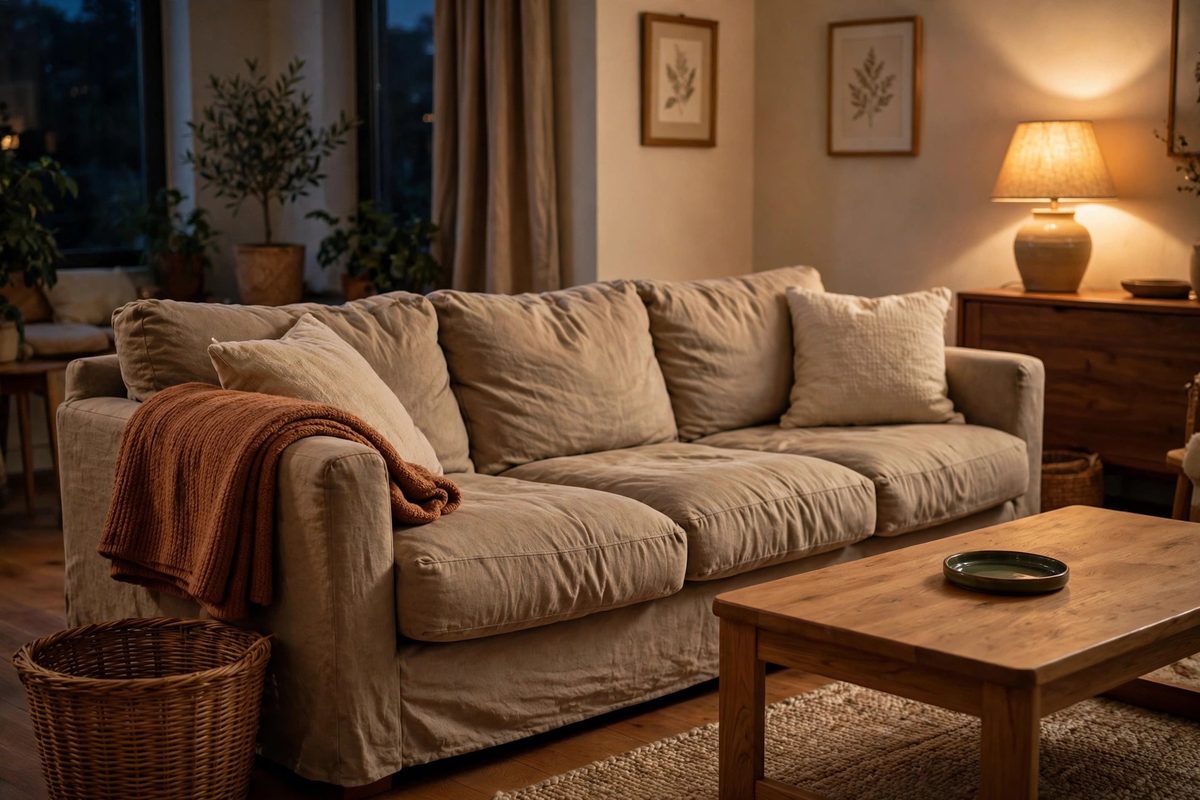
A living room does not stay tidy on its own. It stays tidy because someone resets it, briefly and often. The reset takes ten minutes, once a day, ideally in the evening. Cushions plumped. Throws folded. Remotes back in the tray. Toys back in their basket. Anything that belongs elsewhere goes to its room on your next trip through the house. That is it. A daily ten minute reset beats a weekend deep clean every time, because the pile never gets big enough to feel hopeless.
Mistakes to avoid:
- Buying storage before the edit. You will buy the wrong size and fill it with things that do not belong in the room.
- Open shelving everywhere. It looks airy in photos and collects dust and clutter in real life.
- One big basket for everything. It becomes a digging pit, and remotes go missing in it.
- No home for remotes and chargers. Small things scatter, and evenings start with a search.
- Skipping the nightly reset. One skipped day becomes a week, and the room slides back to where it started.
Frequently asked questions
Q: How do I organize a small living room?
A: Zone it with a rug, go vertical with wall shelves, and choose storage furniture that does two jobs, like a storage ottoman. Keep one rule: if something new comes in, something old leaves.
Q: What is the best storage for a living room with kids?
A: Closed storage plus one basket per kind of toy or game. Rotate toys so only a few live in the room at once, and keep a washable throw on the sofa.
Q: How do I hide TV cables in a living room?
A: Use a closed media console, bundle cables with ties, and run them behind the console. Keep one remote tray so remotes and chargers stop spreading across every surface.
Q: How often should I declutter my living room?
A: Do a quick reset daily, a ten minute tidy that puts everything back in its zone, and a full edit once a season. That rhythm keeps the room working without a big overhaul.
Q: How can I make my living room guest-ready fast?
A: Clear the coffee table to one tray, plump the cushions, fold one throw, empty the toy basket to its home, and clear the walking path. That five step pass takes about ten minutes.
A good living room does not ask much of you. It asks for a home for each thing, a limit on how much lives there, and ten minutes a day to put things back. Start with the edit, zone the room by what you actually do there, and let the furniture follow the habits you already have. The room will feel calmer, and an evening at home will feel like a rest instead of a reminder of the mess.
If you want to learn more about how we think about calm, practical systems for real homes, read About Declutter Joy.