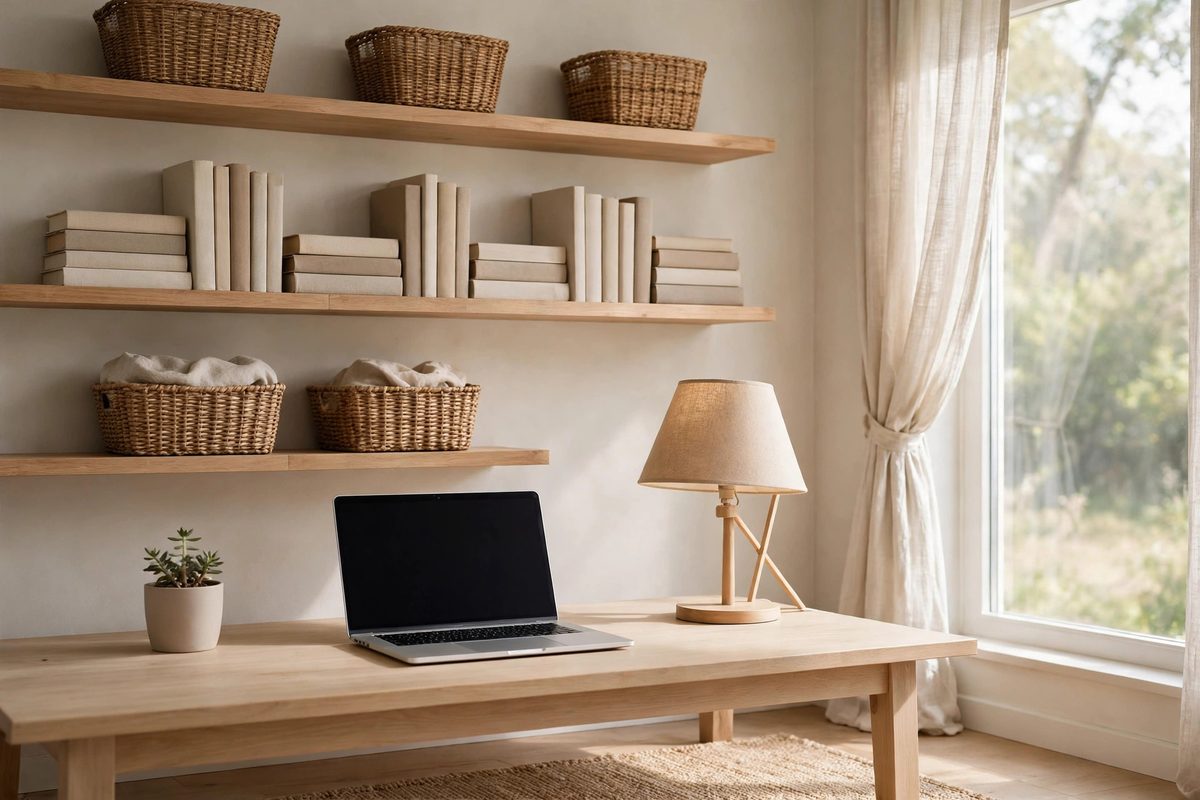
A home office is the room where clutter costs you the most. A messy kitchen slows down dinner. A messy office slows down your thinking, your workday, and your evenings, because the pile is still sitting there when you sit down the next morning. The good news is that a home office is also the easiest room to fix. It is small, it has one clear job, and most of the clutter in it falls into just a few groups: paper, cables, supplies, and things that belong somewhere else entirely.
This guide covers home office organization ideas that work in real homes, from a spare room with a door to a desk squeezed into a living room corner. No built-ins, no renovation, and no system you need a manual to maintain. Just a desk that stays clear, storage that matches what you actually keep, and a short weekly reset that stops the pile from coming back.
Table of Contents
- Start with a desk edit
- Zone the office: work, storage, and reference
- The desk setup that keeps you focused
- Cable management, the invisible clutter
- Paper, files, and the inbox that never empties
- Shelves and wall storage that earn their space
- Supplies in drawers, not on the desk
- Small home offices and shared corners
- Budget home office organization
- The weekly reset and mistakes to avoid
- Frequently asked questions
Start with a desk edit
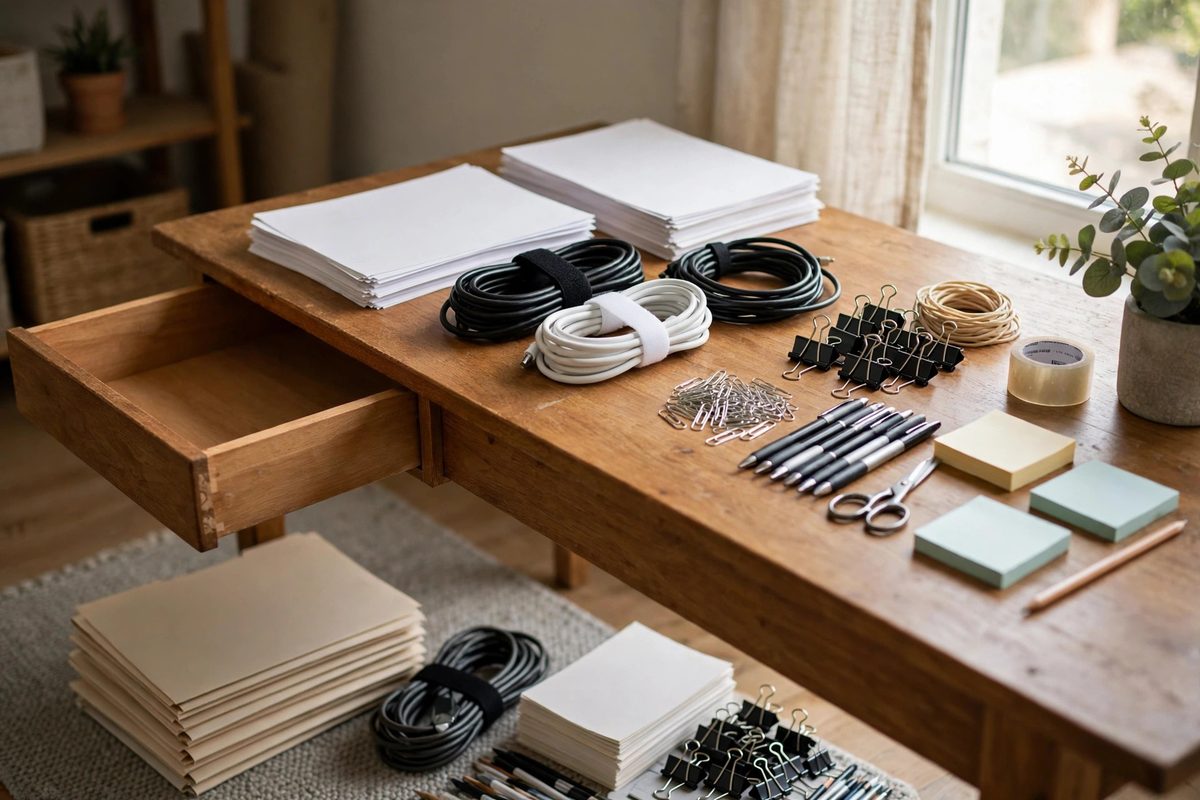
Before you buy a single organizer, clear the desk completely and look at what actually lives on it. Not the office you imagine, the one you have. You will find pens that do not write, cables for devices you no longer own, papers you already handled, chargers that belong to someone else in the house, and at least three things that have nothing to do with work at all.
Sort into four groups: keep on the desk because you use it daily, keep but store elsewhere in the office, move to its real home in another room, and throw away or recycle. Be honest about the first group. Most people use five things a day: a computer, a notebook, a pen, a drink, and a phone charger. Everything else is storage, not desk equipment. The same sort-first rule runs through our guide to Craft Room Organization Ideas, and it matters just as much here, because a desk edit is the only step that makes the rest of the system possible.
Zone the office: work, storage, and reference
An office works when each kind of work has its own spot. One surface doing everything becomes a pile within a week. Three small zones stay usable because each one has a single job and a clear boundary.
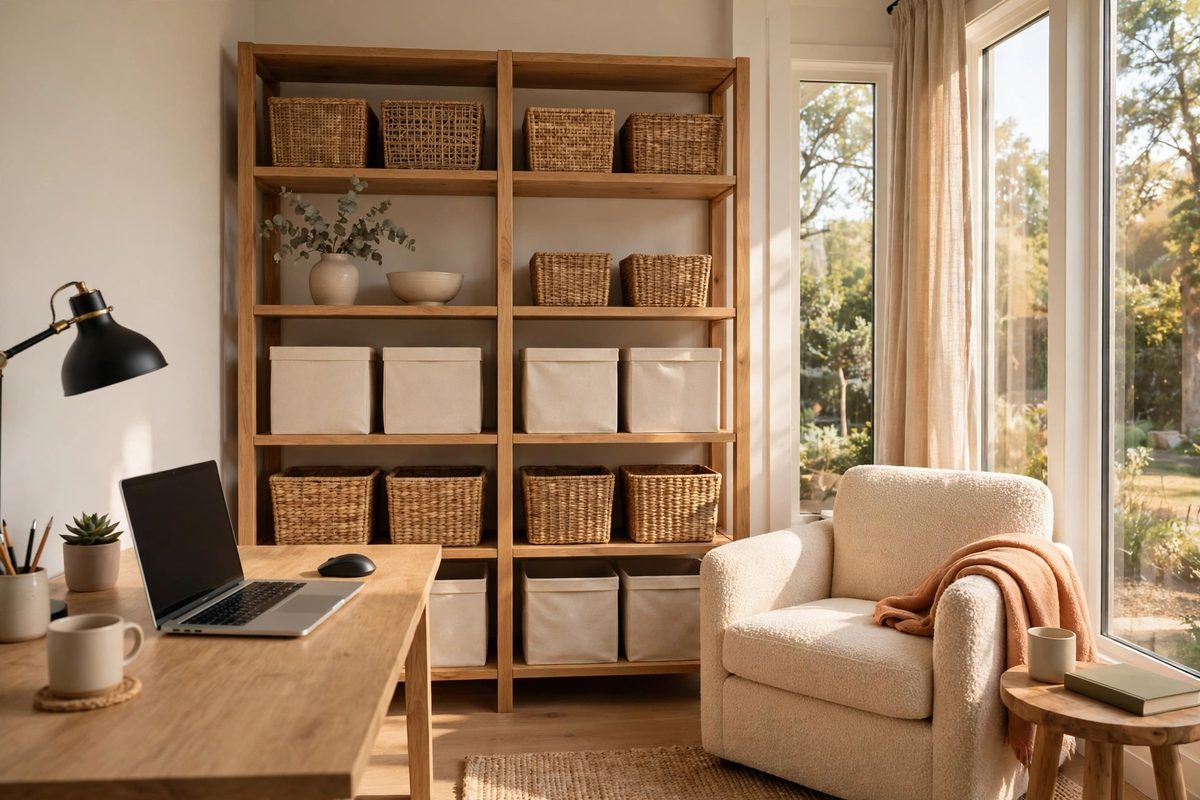
The work zone is the desk surface itself, kept clear for the task in front of you. The storage zone is a drawer, shelf, or cabinet within arm’s reach that holds supplies and files. The reference zone is one shelf or one tray for the books, binders, and papers you consult often but do not need on the desk. When the zones are separate, a project can spread out on the desk without swallowing the whole room, and cleanup means returning things to their zone, not starting over. The same zone thinking we used for per-person mudroom spots in our Garage Organization Ideas guide applies here, just at desk scale.
The desk setup that keeps you focused
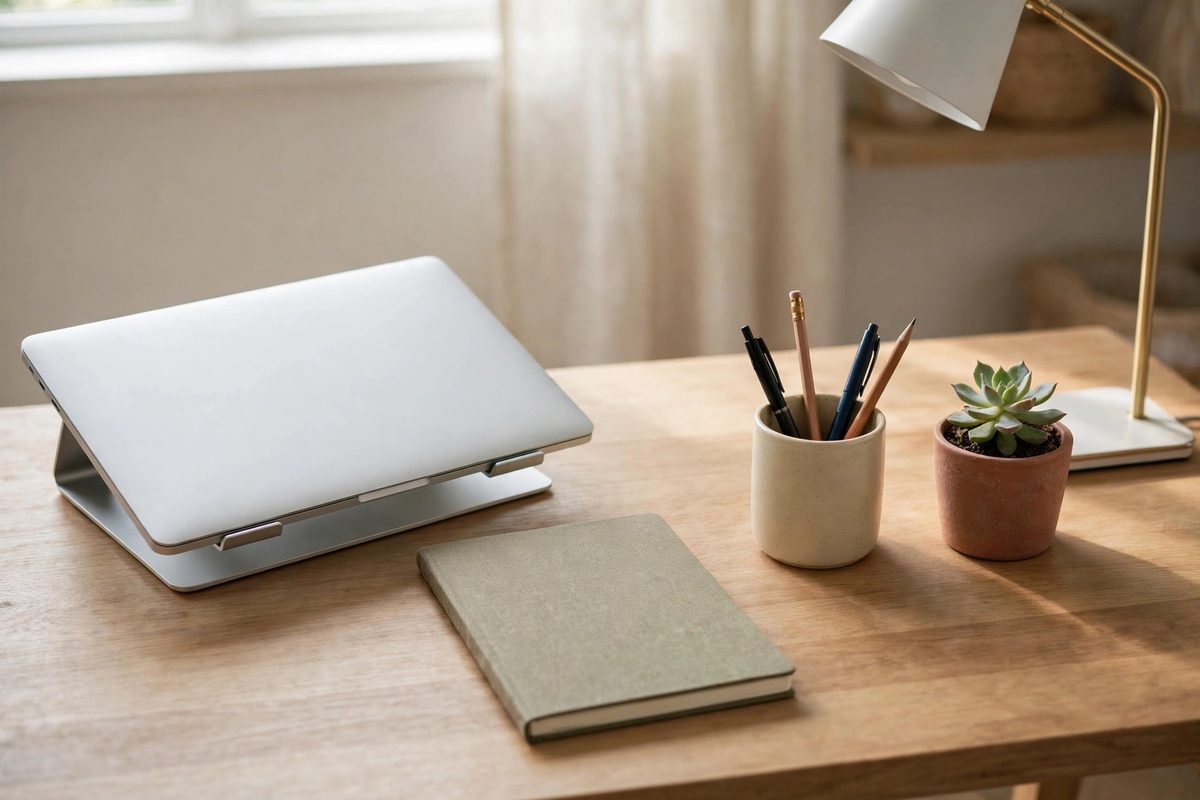
A clear desk is not a personality trait. It is a setup decision, and it comes down to what you allow to live on the surface. The rule is simple: only the tools for today’s work stay out. Everything else has a drawer, a shelf, or a tray.
Put the monitor or laptop at eye level, with the keyboard where your arms rest naturally. Keep one pen, one notebook, and one drink on the desk. Keep the phone charger plugged in at the back edge, not draped across the middle. If you use a second screen, give it a stand so the space underneath it stays usable for a notebook. Leave one patch of empty surface on purpose. An empty patch is where the next task lands, and a desk with nowhere to put the next thing is a desk that starts piling again by lunch.
Cable management, the invisible clutter
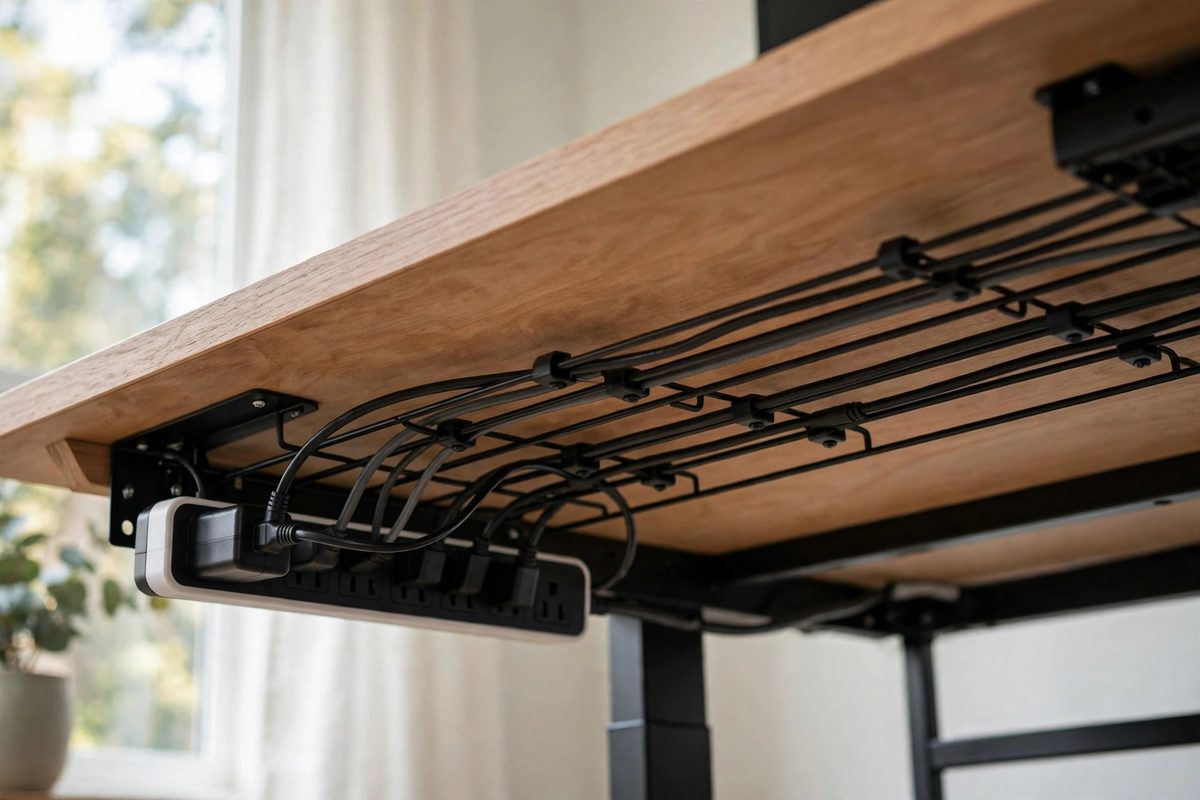
Cables are the clutter nobody counts, and they make a tidy desk look messy faster than anything else. A laptop charger, a monitor cable, a phone cable, a lamp cord, and a printer cable tangle into a knot that collects dust and makes every unplug a small wrestling match.
Fix them once, at the back of the desk, and they stay fixed. Run cables through a tray or a channel mounted under the desk so they never touch the floor. Label each cable at the plug end with a small tag or a strip of tape, so you can unplug the right one without crawling under the desk. Keep one spare cable of each type you use in a labeled pouch in a drawer, and recycle the rest. A cable for a device you no longer own is not a spare, it is clutter with a plug on it.
Paper, files, and the inbox that never empties
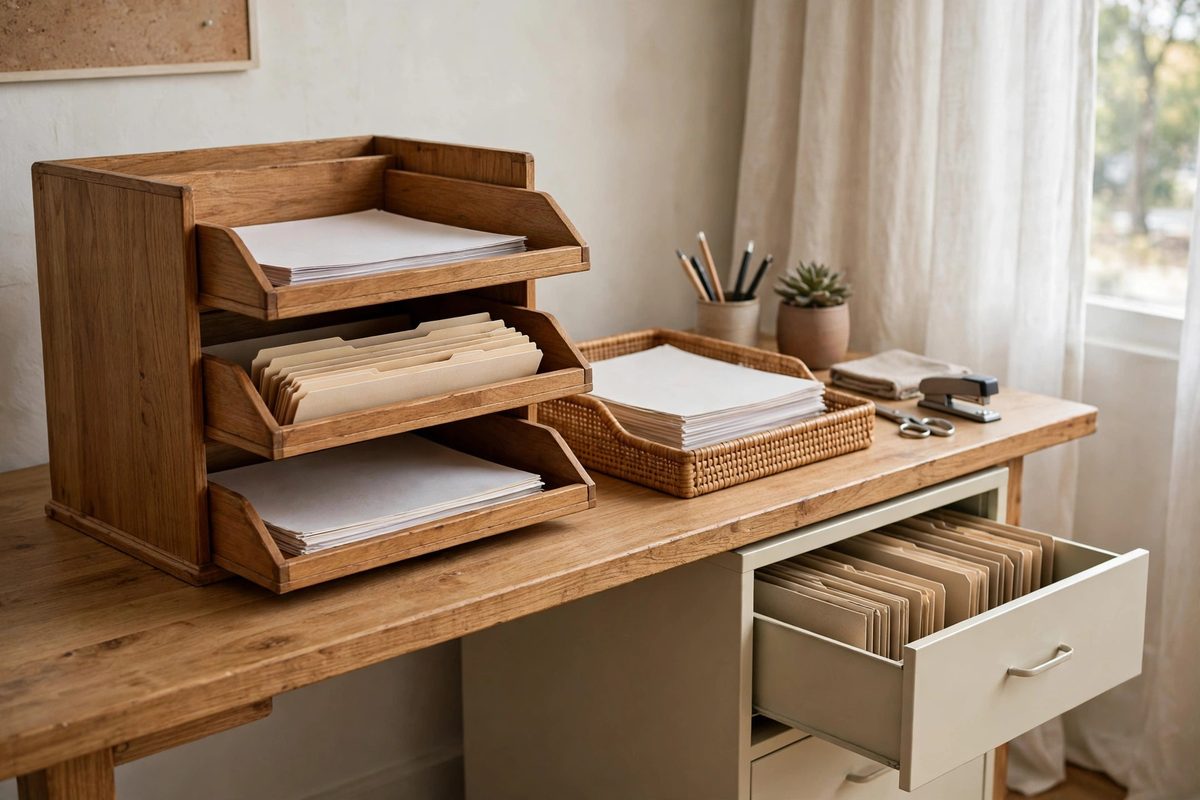
Paper is the one kind of office clutter that grows on its own. Mail arrives, forms print, notes accumulate, and the pile on the desk becomes a second filing system that nobody can search. The fix is a small, strict flow: paper comes in, gets handled once, and then lives in exactly one of three places.
Set up three trays or one desktop sorter with three slots: to do, to file, and to read. When paper arrives, it goes in a slot the same day. To do gets handled within the week. To file goes into a labeled folder in a drawer or a filing box at the end of the week. To read gets read or recycled within a few days, not kept as a someday pile. Scan anything you need to keep but do not need on paper, then shred or recycle the original. A filing cabinet full of paper you never open is storage for the past, not an office system.
Shelves and wall storage that earn their space
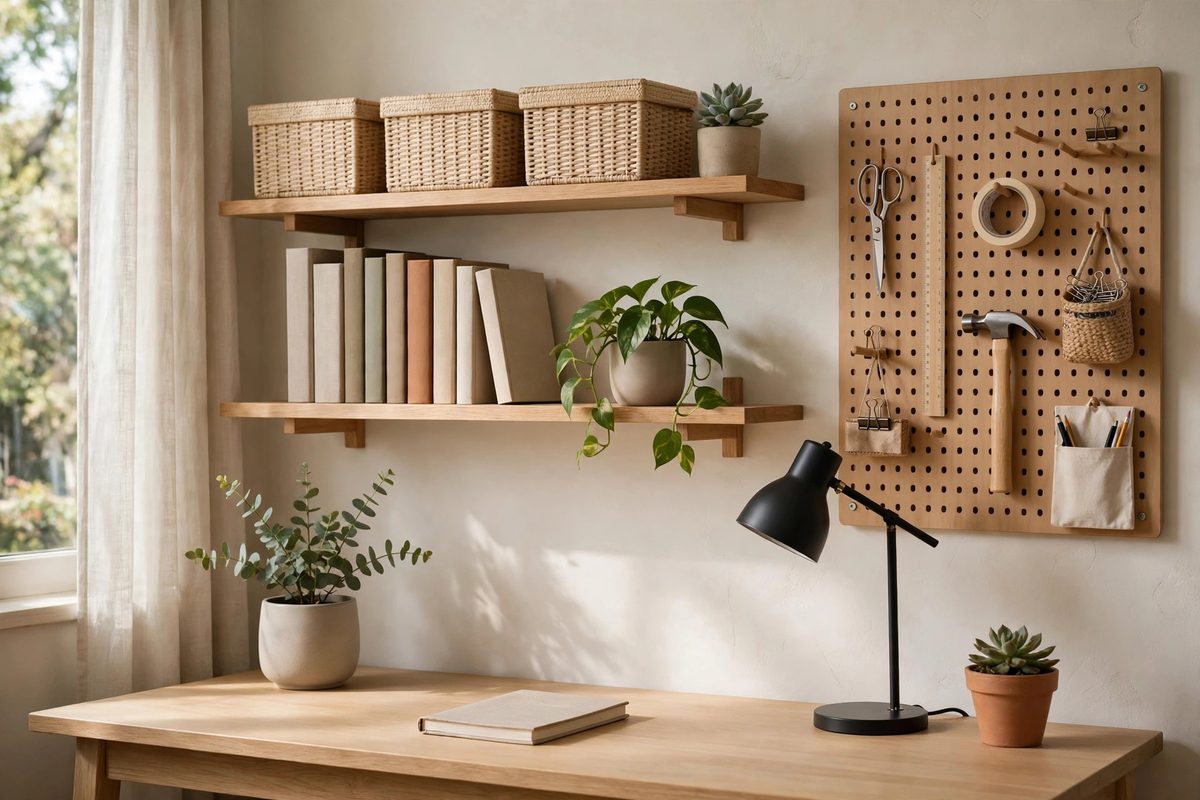
When the desk is full, the answer is usually up, not out. Wall shelves and a pegboard hold more than a second desk ever will, and they keep supplies visible instead of buried in a drawer you never open.
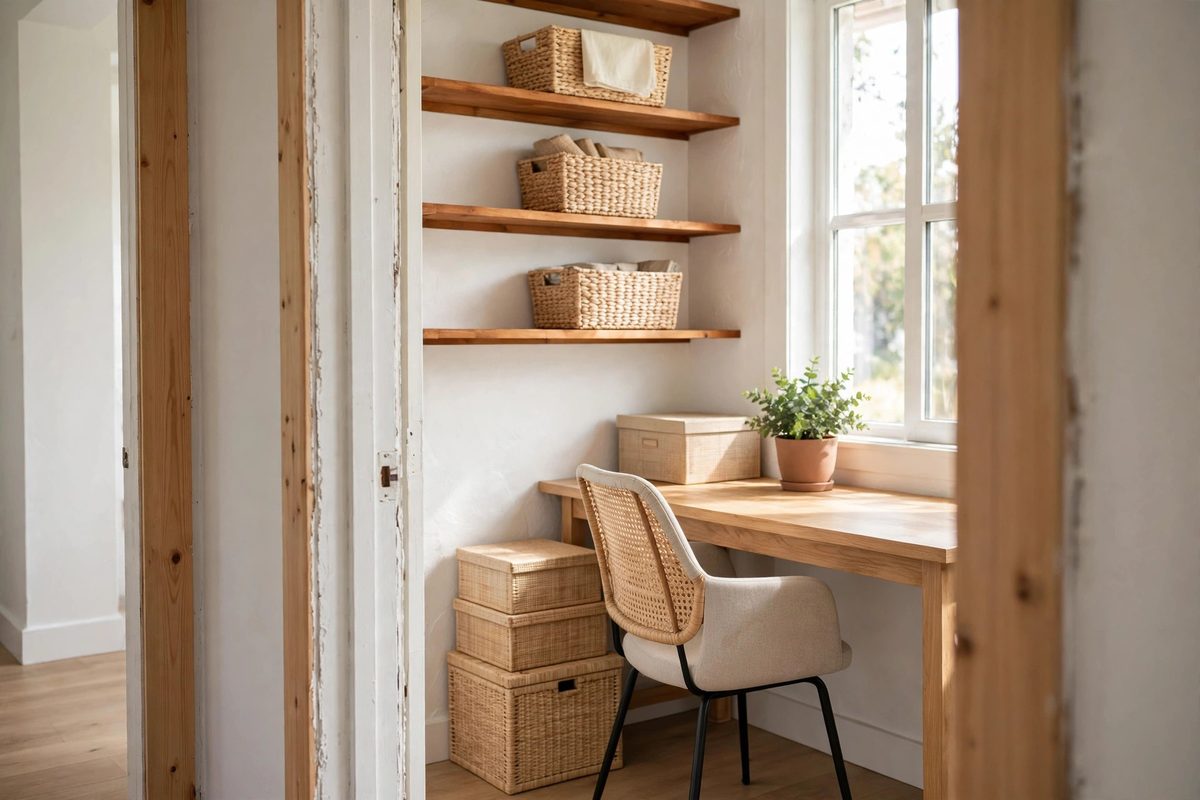
Mount one shelf above the desk for the things you reach for weekly: reference books, binders, and a storage box or two. Add a pegboard or a rail for the daily tools: scissors, tape, a ruler, and headphones. Keep the shelf honest. A shelf that holds decorations is fine, but a shelf that holds ten boxes of supplies you never touch is just a closet at eye level. If a box has not been opened in three months, it moves to closed storage or leaves the office. The shelf earns its space only when what sits on it gets used.
Supplies in drawers, not on the desk
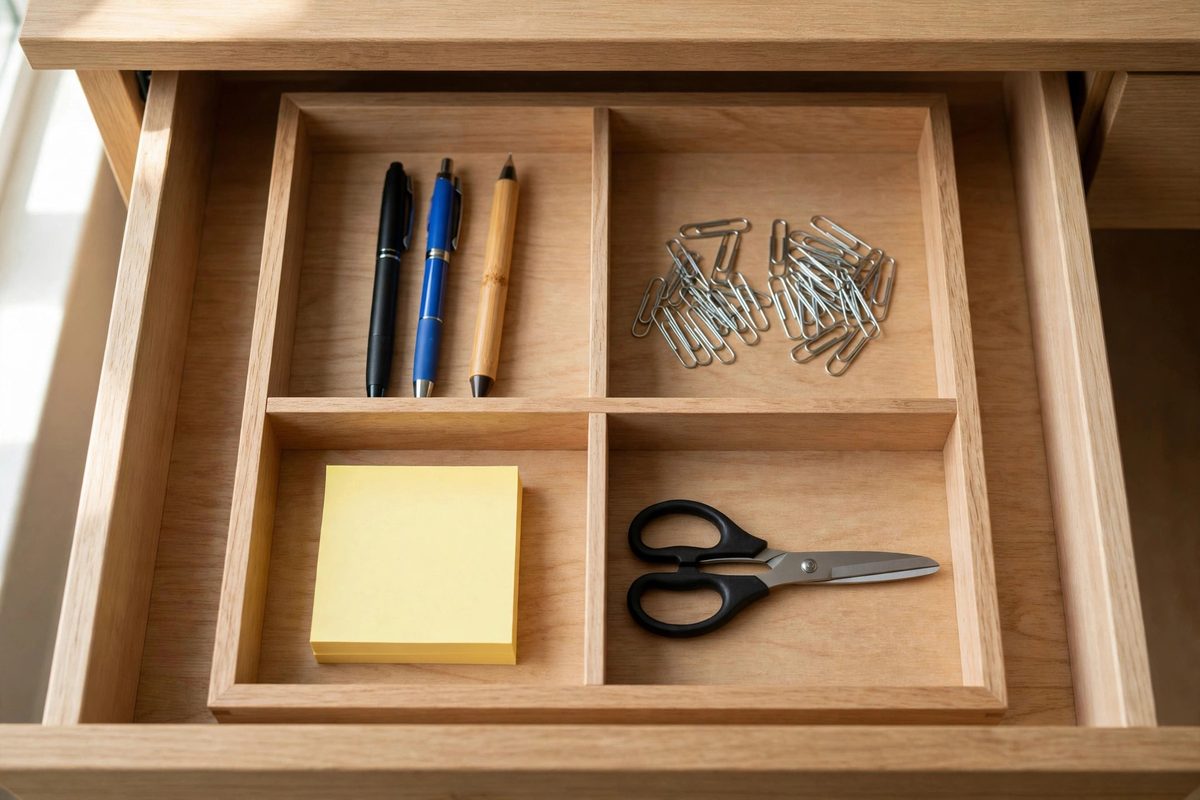
Office supplies are small, and small things are what defeat a desk. Pens, clips, sticky notes, batteries, and envelopes have no natural hook, so they spread across the surface and fill every empty patch.
Give supplies a drawer, and give the drawer dividers. One tray for pens and pencils, one section for clips and sticky notes, one for chargers and small cables. Keep one of each thing you use weekly, and store the bulk pack elsewhere. A drawer with twelve pens is a pen shop. A drawer with three pens is a working drawer. When the drawer is full, something comes out before anything new goes in. The same one-of-each rule we used for craft supplies in our Craft Room Organization Ideas guide works here too, because supplies behave the same way in every room.
Small home offices and shared corners
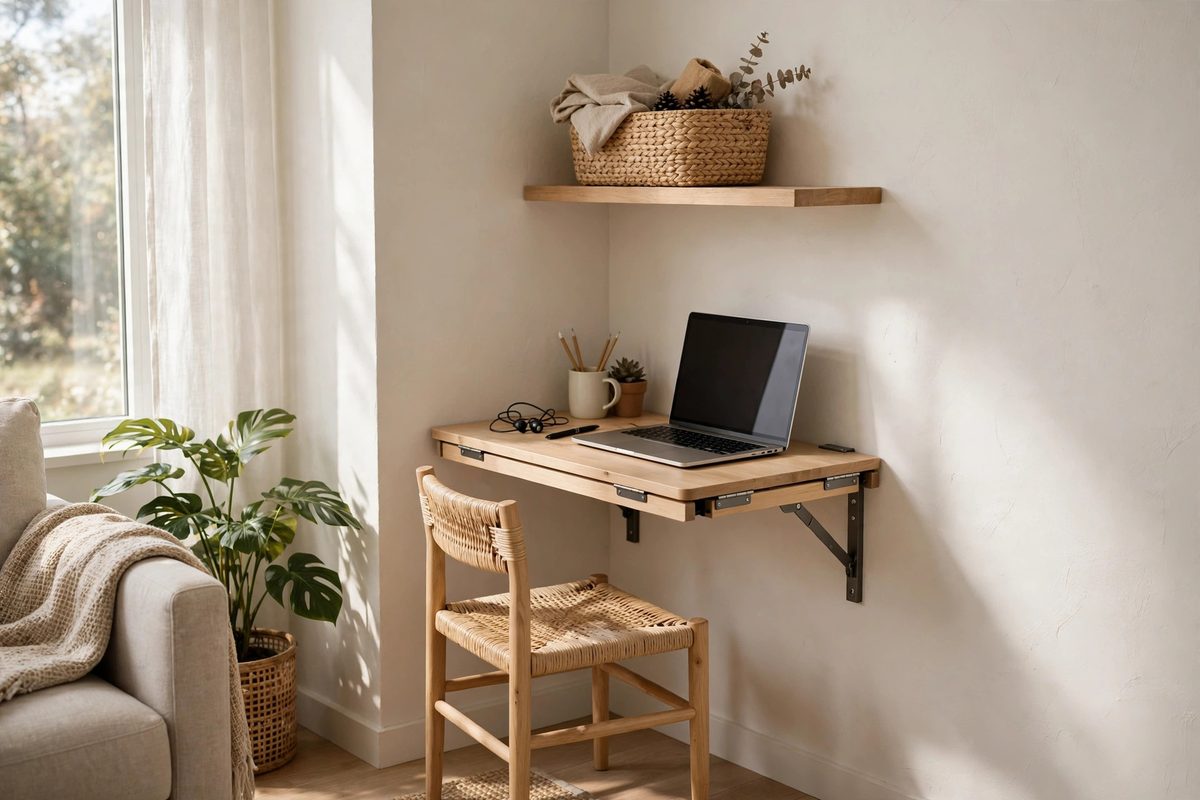
Most home offices are not rooms. They are a corner of a bedroom, a stretch of living room wall, or a desk in a hallway that has to disappear at the end of the day. That is fine, as long as the setup is honest about its size. A corner office cannot hold a full shelving wall and a filing cabinet and a printer station, and pretending otherwise only creates a new obstacle.
Go vertical before you go wider. One shelf above the desk and one drawer unit underneath hold more than a bigger desk in the same footprint. Keep the walking path clear first, then add storage around it, not in it. Use a folding or wall-mounted desk if the corner has to become a living room again in the evening. Keep one rule that saves small offices: when the workday ends, the desk gets cleared. A shared corner works only if the next person to use the space finds a clean surface, not your afternoon. The same small-space discipline helped the tight hallway in our Entryway Organization Ideas guide, and it works just as well at a corner desk.
Budget home office organization
You do not need custom built-ins or a designer desk to fix a home office. Some of the most usable offices I have seen cost less than a week of coffee. A secondhand desk, a few sturdy shelves, and labeled boxes will do more than an expensive setup that nobody maintains.
Spend money only where it changes daily life. A chair that supports your back through a full workday is worth paying for, because a sore back helps nobody. So is a monitor stand or a laptop riser that puts the screen at eye level. Everything else can be simple, as long as it is easy to reach and easy to put back.
Which home office storage fits your office?
| Piece | Best for | Typical cost | Watch out for |
|---|---|---|---|
| Monitor stand or laptop riser | Eye-level screen, space underneath | $20-$60 | Check it holds your screen’s weight |
| Desktop file sorter | Incoming paper and daily files | $15-$40 | Three slots only, or it becomes a pile |
| Drawer organizer tray | Pens, clips, and small supplies | $10-$25 | One of each item, not a dozen |
| Wall shelf | Books, binders, and reference boxes | $25-$80 | Mount into studs for heavy loads |
| Filing box or small cabinet | Papers to keep long term | $20-$60 | Label folders, scan what you can |
Quick pick guide:
- You have a spare room: a real desk, a shelf above it, a filing box, and zones for work, storage, and reference. That quartet covers the desk, the paper, and the supplies.
- You have a corner in a shared room: a compact desk, one wall shelf, a drawer unit, and a clear-desk rule at the end of the day. Nothing that blocks the room when work ends.
- You rent and cannot drill much: a freestanding desk, a leaning shelf, a desktop sorter, and a cable tray that clamps on. Everything leaves with you when you move.
- You work from a laptop at the kitchen table: a portable caddy with your daily tools, a single tray for paper, and a five minute pack-up when the day ends. The office is a kit, not a room.
The weekly reset and mistakes to avoid
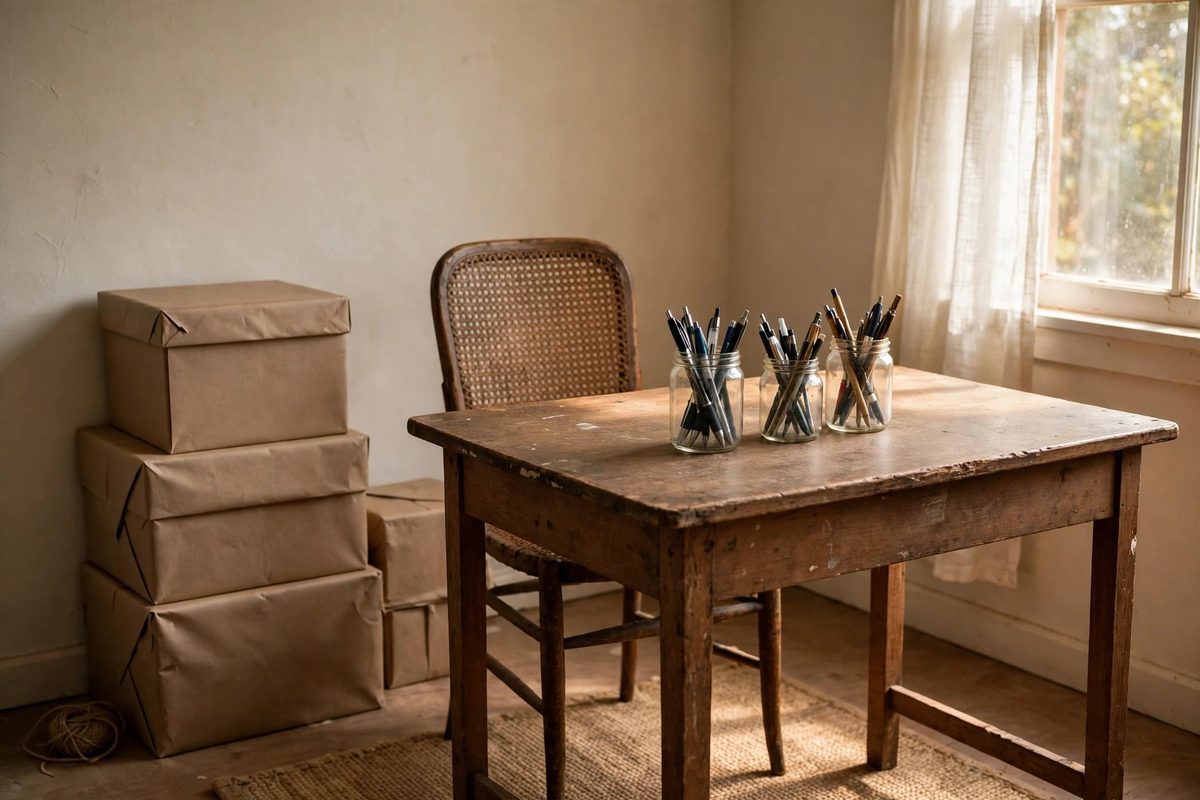
A home office does not stay tidy on its own. It stays tidy because someone resets it, briefly and often. The reset takes ten minutes at the end of the workweek: clear the desk, file the to-do tray, empty the bin, wipe the surface, and put the cables back in their tray. Do it on Friday, not Monday, so Monday starts with a clean desk instead of a reminder of last week.
Mistakes to avoid:
- Buying organizers before the edit. You will buy the wrong size and fill them with supplies you do not use.
- Letting the desk hold storage. A desk covered in supplies cannot do its job, which is holding the work in front of you.
- No cable plan. Loose cables tangle, collect dust, and make a tidy desk look messy.
- Keeping every cable and charger. Spare cables for devices you no longer own are clutter with a plug on it.
- A paper pile with no flow. Paper that never gets filed or recycled becomes a second filing system nobody can search.
- Skipping the weekly reset. Ten minutes on Friday prevents the slow pile-up that fills most desks by Wednesday.
Frequently asked questions
Q: How do I organize a small home office?
A: Go vertical. One shelf above the desk, one drawer unit underneath, and a strict clear-desk rule at the end of the day. Keep the walking path clear first, and give every item one home that earns its spot each week.
Q: How do I keep my desk clear?
A: Only the tools for today’s work stay on the surface: computer, notebook, pen, and a drink. Everything else lives in a drawer, on a shelf, or in a tray. Clear the desk every Friday so Monday starts clean.
Q: How do I organize home office cables?
A: Run them through a tray or channel under the desk, label each cable at the plug end, and keep one spare of each type in a drawer. Recycle cables for devices you no longer own.
Q: How do I organize home office paperwork?
A: Use three slots: to do, to file, and to read. Handle to do within the week, file at the end of the week, and read or recycle within a few days. Scan what you need to keep and shred the paper original.
Q: What is the cheapest way to organize a home office?
A: Start with the edit, then add a drawer organizer tray, a desktop file sorter, and one wall shelf. Spend on a good chair and a screen at eye level first, and keep the rest simple.
A good home office does not ask much of you. It asks for a clear desk, a place for paper to flow instead of pile, cables that stay out of sight, and ten minutes on Friday to put things back. Start with the edit, zone the room by job, and let the storage follow the work you actually do. The pile on the desk will still try to come back, because every working home has one, but it will have nowhere to settle if every drawer, shelf, and tray already has a job.
If you want to learn more about how we think about calm, practical systems for real homes, read About Declutter Joy.